Upper Mustang Motorbike Tour 10-Day
Trip Facts
Trip Highlights
- Ride the latest Royal Enfield Himalayan 450, built specifically for mixed terrain and high altitude.
- Enter Upper Mustang with a special permit, one of the few places on Earth that has stayed relatively untouched by mass tourism.
- Navigate the Kaligandaki Gorge, the deepest gorge in the world, with some of Nepal's most challenging and rewarding riding.
- Visit Lo Manthang, an isolated walled city with a culture that feels Tibetan rather than Nepali, where most residents still follow traditional ways.
- Explore Shija Jhong Cave, a 3,000-year-old archaeological site that continues to reveal secrets to researchers.
- See Muktinath Temple and the Eternal Flame, sacred to both Hindu and Buddhist pilgrims, with a natural fire that never goes out.
- Stay in authentic mountain lodges run by local families, not international hotel chains.
- Travel with an experienced guide, trained mechanic, and full support vehicle so you're never alone in remote terrain.
- Ride on everything from paved highways to technical mountain passes to rough off-road sections.
- Learn about the Sky Burial tradition, one of the world's most unique spiritual practices.
Introduction
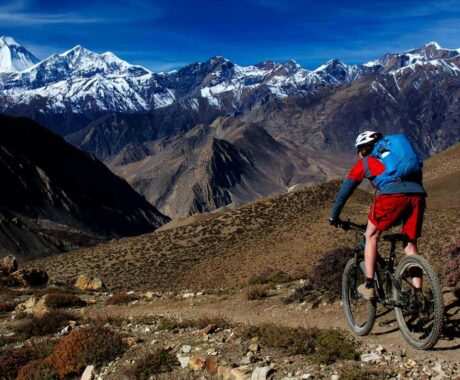
Ride a Royal Enfield Himalayan 450 motorcycle through one of Earth’s most remote mountain regions. The Upper Mustang motorbike tour takes you from Kathmandu’s busy streets through winding Himalayan roads and into the ancient kingdom of Upper Mustang, a place that stayed closed to outsiders until 1992.
This is more than just riding a bike. You’ll navigate the Kaligandaki Gorge (the world’s deepest), discover 3,000-year-old caves, visit old Buddhist temples, and experience the raw Tibetan Plateau landscape all from your motorcycle seat. It’s one of the most capable adventure bikes available, and you’ll need it for what’s ahead.
Over 10 days, you’ll travel roughly 600 kilometers through mixed terrain. You’ll sleep in local mountain lodges and meet the Loba people who call Lo Manthang home. This kind of adventure stays with you long after you get home.
Best Time for Upper Mustang Motorbike Tour
Spring (March to April)
Clear skies, mild temperatures between 15 and 25 degrees Celsius, good road conditions, and excellent visibility of the snow-capped peaks. This is the most popular time, and for good reason.
Autumn (September to October)
Crisp, stable weather with exceptional visibility. Sometimes the air is so clear you can see for miles. Slightly cooler but comfortable for riding. Fewer tourists than spring. We personally prefer these months.
Shoulder Seasons (May and November)
May has occasional rain but roads are still passable. November is cool but stable with slightly more wind.
Never Go (June to August)
Monsoon rains turn the roads to mud and create landslide risks. Upper Mustang roads become impassable.
Winter (December to February)
High passes get snow, temperatures drop below freezing at night, and roads can close. Only experienced riders should consider this.
Difficulty and Physical Requirements
What This Tour Demands
This trip is challenging. You’re not a professional motorcycle racer, but you need to be comfortable riding motorcycles for long days on varied terrain.
What you need: Basic motorcycle riding skills and the ability to handle a 450cc bike on different road surfaces, stamina for 5 to 7 hours in the saddle most days (some days on rough, bouncy roads), a strong core since uneven terrain requires active body positioning, and mental toughness for long riding days, high altitude, basic accommodations, and isolation.
Most people who ride motorcycles regularly and stay active physically can handle this. If you ride 50 kilometers or more on a motorcycle most weeks, you have the foundation.
Managing Altitude
The highest point is Lo Manthang at 3,800 meters (12,467 feet). Most riders feel mild altitude effects like tiredness or a light headache. We build in acclimatization time on Days 1 and 3 before you reach high altitude. Drink plenty of water, rest well, and move at a relaxed pace to minimize problems.
If you’ve had altitude sickness before, talk to your doctor.
Motorcycle Experience Needed
You must have a valid motorcycle license from your home country or an International Driving Permit. You should be comfortable riding on main roads and basic off-road sections.
Off-road experience is helpful but not required. Our guides know how to pace groups and teach technique. The support vehicle is always nearby if you need a break.
This tour is not suitable for someone learning to ride for the first time, someone with serious back or neck problems, or someone uncomfortable with full days of motorcycle riding.
Outline Itinerary
Day 1: Arrive in Kathmandu
Day 2: Kathmandu to Pokhara (200 km, 6 to 7 hours)
Day 3: Pokhara to Kalopani (123 km, 5 to 6 hours)
Day 4: Kalopani to Muktinath to Kagbeni (63 km, 5 to 6 hours)
Day 5: Kagbeni to Lo Manthang (45 km, 5 to 6 hours)
Day 6: Explore Lo Manthang and Chhosar
Day 7: Lo Manthang Back to Jomsom (55 km, 6 hours)
Day 8: Jomsom to Pokhara (158 km, 7 hours)
Day 9: Pokhara Back to Kathmandu (200 km, 6 hours)
Day 10: Departure
Permits and Documents You’ll Need
Upper Mustang Restricted Area Permit
- Upper Mustang is a protected zone that remained closed until 1992. Today you need a special permit to enter.
- Cost: USD 50 per day
- The permit counts days, not nights. It starts when you reach Kagbeni and ends when you leave Kagbeni.
- Minimum requirement: You need at least 2 riders to get a permit. Solo travelers can join a group for permit purposes.
- We handle the application. We just need a copy of your passport photo page. Allow 5 to 7 days before your trip.
ACAP Permit
- The Annapurna region is a protected conservation area. A small permit is required.
- Cost: Around USD 20 to 30 (included in our package).
- We arrange this for you in Kathmandu.
TIMS Card
- A government card used to track trekking routes for safety and tourism data.
- Cost: Around USD 10 to 15 (included in our package).
- We arrange this in Kathmandu.
Documents to Bring
- A valid passport: Must be valid for at least 6 months after your trip.
- Motorcycle license: From your home country or an International Driving Permit. Both work in Nepal.
- Travel insurance: Original policy or a copy showing coverage for emergency medical evacuation. You must have this.
- Flight confirmations: Both international and domestic.
- Hotel confirmations: For the hotels we’ve booked.
- Emergency contacts: Family, bank, insurance company, and your embassy.
About Your Nepal Visa
- You can get a visa when you land at Kathmandu International Airport. Take 5 to 10 minutes. Cost is USD 25 (15-day), USD 40 (30-day), or USD 100 (90-day).
- You’ll need your passport, 1 to 2 passport photos, a return flight ticket, and proof of accommodation.
- Or apply through a Nepali embassy in your home country before you travel. This takes 3 to 5 working days but means one less thing to do at the airport.
Safety, Guides, and How We Protect You
Safety is not something we talk about and then ignore. It shapes every decision we make on these trips.
Your Professional Support Team
- Licensed guides: Every guide holds an official license from Nepal’s Tourism Ministry and has at least 10 years of experience guiding in these mountains. They’re first aid trained and know wilderness rescue. They know the roads, the villages, and what can go wrong.
- Experienced mechanic: A factory-trained Royal Enfield mechanic travels with your group. They check your bike before you ride each day. They carry spare parts. They can fix problems on the road.
- Support driver: The 4×4 vehicle is driven by someone who knows high-altitude driving and all the alternative routes if the main road has issues.
What Happens Before You Ride
- Every motorcycle gets inspected the day before departure. We check tire pressure, brakes, chain tension, fluids, and the overall mechanical condition.
- You get a detailed safety briefing covering how to ride in groups, hand signals for communication, emergency procedures, gear requirements, and altitude warnings.
- We verify you have proper protective gear. This isn’t optional.
During Your Ride
- Your guide assesses the weather and road conditions every morning and adjusts your route if needed.
- You take regular breaks every 3 to 4 hours to prevent fatigue.
- Your group stays together with clear communication.
- We manage altitude gradually so your body can adjust.
If Something Goes Wrong
- We carry a comprehensive medical kit with altitude sickness medication, pain relief, bandages, and emergency supplies.
- We have satellite phones or local mobile service to contact hospitals and emergency services.
- We’ve pre-arranged helicopter evacuation with local hospitals if a serious injury happens.
- Your travel insurance must cover emergency medical evacuation. This can cost USD 10,000 to 50,000, which is why it’s not optional.
Why Travel Insurance is Required
- Remote high-altitude terrain means evacuation costs are expensive. Motorcycle accidents happen even to careful riders. Flight delays or family emergencies can disrupt your plans.
- Your insurance needs to cover emergency medical evacuation by helicopter, mountain rescue, hospitalization at high altitude, personal accident and injury, and trip cancellation.
- Reputable companies like World Nomads, Safety Wing, and Allianz offer this coverage for around USD 50 to 150 for a 10-day trip.
- We will not start your trip without proof of valid insurance.
Accommodation and What You’ll Eat
In Kathmandu and Pokhara: Comfortable Hotels
- You’ll stay in 3-star hotels, the kind of place that’s clean, comfortable, and well-run without being luxury.
- Your room has a private bathroom with hot water, WiFi (though Pokhara can be spotty), air conditioning in Kathmandu, and daily housekeeping.
- Breakfast is included. Lunch and dinner are on your own so you can explore local restaurants and pick what you like.
In Mustang: Local Mountain Lodges
- These are simple, authentic accommodations run by local families. Your room is basic but clean, usually with twin beds. The bathroom is attached to your room. Hot water depends on solar panels or a wood-burning stove, so it’s unreliable.
- There’s no WiFi in Upper Mustang. This is intentional. You’ll disconnect from the outside world completely.
- All meals are included: breakfast, lunch, and dinner featuring Nepali and Thakali cuisine.
Food and What to Expect
- Breakfast includes fresh bread, eggs, fruit, tea, and coffee.
- Lunch is usually dal bhat (rice and lentils), vegetables, sometimes meat, and fresh bread.
- Dinner might be momos (dumplings), thukpa (noodle soup), chow mein, or rice with curry, always with vegetables.
- Tell us ahead of time if you’re vegetarian, vegan, or have allergies. We’ll let the lodges know.
Water and Food Safety
- All drinking water is boiled at the lodges. It’s safe. Refillable bottles are provided.
- Never drink tap water. Stick to boiled water and refilled bottles.
- Lodges prepare food hygienically. All cooking water is boiled. Fresh ingredients come from local markets daily.
- Minor stomach upset is common at altitude and usually passes quickly. Bring anti-diarrheal medication.
Responsible Travel Practices
We believe tourism should help the places and people we visit, not harm them.
Supporting Local Communities
- We hire guides, mechanics, lodge staff, and cooks from the Mustang and Annapurna regions. Your money directly supports local families and livelihoods.
- We pay above-average wages and follow ethical employment practices. Our staff members are valued team members, not just vendors.
- We teach riders about Loba, Thakali, and Buddhist customs. Sacred sites are visited with respect, not treated as photo opportunities.
Protecting the Environment
- We pack out everything we pack in. There’s no incentive to leave trash since fuel is included in your price.
- Lodges compost organic waste. Non-organic waste gets carried out to proper disposal sites.
- A portion of ACAP permit fees funds the Annapurna Conservation Area Project, which protects forests, wildlife, and water sources in the region.
- Royal Enfield Himalayan 450 bikes are fuel-efficient compared to larger adventure bikes, keeping our carbon footprint lower.
- We partner with local conservation groups working to protect Upper Mustang’s fragile high-altitude ecosystem.
Cultural and Archaeological Respect
- Monasteries, stupas, and prayer sites are visited with reverence. No loud noise, disrespectful behavior, or unwanted photography.
- Ancient sites like Shija Jhong Cave are fragile. We use licensed local guides and educate respectfully without causing damage.
- The Sky Burial tradition is presented with cultural context and deep respect, never as a spectacle for tourists.
- We always ask permission before photographing people, homes, or sacred spaces.
Alternate Treks for Upper Mustang Motorbike Tour
If you love the adventure and remote landscapes of the Upper Mustang Motorbike Tour, here are three trekking options that offer a similar experience:
- Annapurna Circuit Trek is ideal if you prefer trekking instead of riding, offering dramatic Himalayan scenery, high mountain passes, and traditional villages similar to the Mustang region.
- Upper Mustang Trek allows you to explore Lo Manthang, ancient monasteries, and the unique Tibetan-influenced culture of Mustang on foot without needing motorcycle experience.
- Manaslu Circuit Trek is a great option if you want a quieter and more remote adventure with challenging high passes and strong cultural immersion in authentic mountain communities.
Why RP Adventures Should Be Your Guide
We’re a Nepal-based company that has spent over 15 years running adventure trips in these mountains. We don’t operate from a call center somewhere else. Our team lives here, knows these roads, and understands what makes trips like this work safely and well.
Real Experience in These Mountains
Every guide we send with you holds an official license from Nepal’s Tourism Ministry. That’s not just a certificate. It means years of practical experience navigating these roads in all seasons. Our mechanic has hands-on experience fixing Royal Enfield motorcycles on some of Nepal’s toughest terrain.
We recently upgraded our entire fleet to Royal Enfield Himalayan 450 bikes because we’ve ridden them ourselves on every road you’ll cover. We know exactly how they perform on the technical sections, the long climbs, and the rough descents.
Living here means we know more than just the route. We know the villagers, the lodge owners, and the local authorities. We understand which villages welcome visitors and which need extra respect. We know when the roads wash out and which alternative routes work best.
Safety Built into Everything
A 4×4 support jeep travels with your group the entire time. This vehicle carries spare parts, extra fuel, a trained mechanic, and backup gear. If your bike has issues, help arrives quickly. If you’re tired or hurt, someone is there to help.
We don’t sell you an image of adventure while cutting corners on safety. This tour is challenging, and we’re honest about that. If we think it’s not the right fit for you, we’ll tell you that too.
We Actually Care About the Places We Visit
The money you spend supports local guides, mechanics, and lodge owners in these communities. We work with local conservation efforts to protect the Annapurna region. We teach our riders about local customs and spiritual practices before you visit monasteries and sacred sites.
We’ve built these relationships over years. We’re not extracting value from these places; we’re part of them.
Ready to Book Your Adventure
How to Reserve
- Email us at info@rpAdventures.com with your full name, passport number, nationality, motorcycle license info, and any dietary needs.
- We’ll send you booking details, a payment schedule (typically 50 percent deposit to confirm, 50 percent 4 weeks before), a pre-trip questionnaire, and insurance recommendations.
- We request your passport copy for the Upper Mustang permit. This takes 5 to 7 days to process.
- One week before departure, we send final details: updated weather forecast, complete packing list, emergency contact numbers, and your guide’s introduction.
- Our driver picks you up from Kathmandu airport and takes you to your hotel.
Questions Before Booking
Contact us anytime. We’re honest about whether this trip is right for you.
- Email: info@rptreks.com
- WhatsApp or phone: +9779849988926
We respond within 24 hours.
Why This Trip Stays with You
Riders who finish this tour tell us things like: “I felt more alive and challenged than I ever have.” Or “The landscape is like another planet, but the people and culture affected me most.” Or “Riding the Kaligandaki Gorge was the most intense motorcycle experience of my life.”
This is not a casual tour. It’s an adventure into one of Earth’s last truly remote places, guided by people who know it inside and out and care about doing it right.
If you’re ready to push yourself, ride through some of the world’s most dramatic terrain, and experience a culture that outsiders rarely see, let’s do this together.
We’ll see you on the road.
Detailed Itinerary
-
Day 1: Arrive in Kathmandu
Travel: Private car
We'll pick you up from Kathmandu International Airport and take you to your hotel. You'll meet your tour leader, go over safety details, learn about your motorcycle, and discuss what's ahead.
If you want, explore Thamel in the evening, the busy tourist neighborhood full of restaurants and shops.
Altitude: 1,300mMeals: DinnerAccommodation: 3-star accommodation -
Day 2: Kathmandu to Pokhara (200 km, 6 to 7 hours)
Travel: Royal Enfield Himalayan motorcycle plus support jeep
Your motorcycle journey begins today. You'll head south on the Prithvi Highway, following the Trishuli River through green foothills. The road is mostly paved, giving you a chance to get comfortable with your bike before the terrain gets rougher.
Stop for lunch at a local restaurant where you can see terraced farms on the hillsides.
Arrive in Pokhara by evening. Walk around Fewa Lake, enjoy the cafes, and soak in the peaceful mountain town atmosphere.
Altitude: 822mMeals: BreakfastAccommodation: 3-star accommodation -
Day 3: Pokhara to Kalopani (123 km, 5 to 6 hours)
Travel: Royal Enfield motorcycle plus support jeep
The real adventure starts today. You'll first climb to Sarangkot viewpoint for views of the Annapurna peaks including Dhaulagiri and Machhapurche.
Then you transition from smooth roads to mixed terrain. You'll ride along the Kaligandaki River on a combination of paved sections and rough off-road tracks. The road gets narrower as you descend into the gorge, one of the most dramatic landscapes in Nepal.
Stop at Rupche Waterfall for a break and visit small villages where you'll meet local Gurung and Magar people.
You'll arrive at Kalopani, a small village where the landscape completely changes. You're now in the rain shadow of the Annapurnas, drier and higher.
Altitude: 2,530mMeals: Breakfast, Lunch, DinnerAccommodation: Mountain lodge with bathroom -
Day 4: Kalopani to Muktinath to Kagbeni (63 km, 5 to 6 hours)
Travel: Royal Enfield motorcycle plus support jeep
After breakfast, ride to Marpha Village. Walk through the village and see the traditional Thakali stone houses, apple orchards, and local farms.
Continue to Jomsom, then climb to Muktinath Temple (3,800 m), one of Nepal's holiest pilgrimage sites for both Hindus and Buddhists. You'll see the temple itself with views of Nilgiri Mountain. Visit the Eternal Flame, a natural gas vent in the rock that burns perpetually, something that has fascinated visitors for centuries.
Descend to Kagbeni, a traditional Thakali village known for its old stone architecture. This village is your gateway to Upper Mustang.
Along the way, stop at Jharkot Monastery, an old Tibetan Buddhist structure perched on a cliff with views across the valley.
Altitude: 2,810mMeals: Breakfast, Lunch, DinnerAccommodation: Mountain lodge with bathroom -
Day 5: Kagbeni to Lo Manthang (45 km, 5 to 6 hours)
Travel: Royal Enfield motorcycle plus support jeep
After breakfast, your guide will check your Upper Mustang Restricted Area Permit. You'll explore Kagbeni's monasteries briefly, then head north.
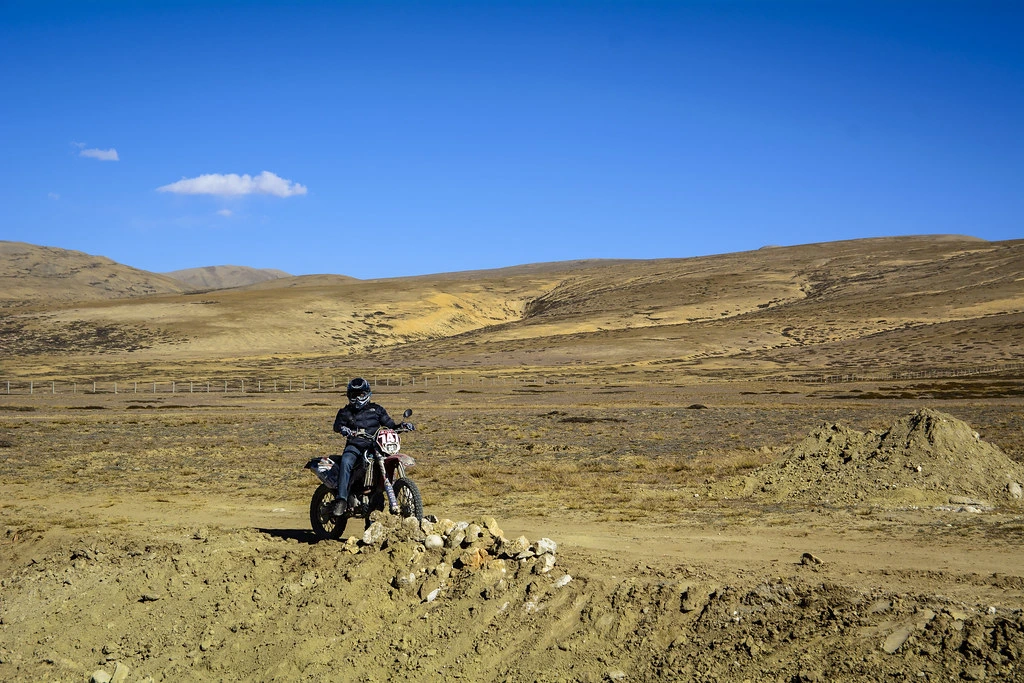
The landscape changes dramatically now. You're on the Tibetan Plateau, barren and windswept, completely different from what you've ridden so far. The 45-km route takes you through several villages perched on high passes: Chuksang, Chella, Samar, Syangboche, Bhina, Ghiling, Ghami, and Tsarang.
You'll ride over rocky terrain and navigate technical sections that test both you and your bike. The views are enormous: wide open plateaus, distant peaks, and a sense of isolation unlike anywhere else.
Lo Manthang appears on the plateau like something from another era. This walled city of about 1,000 people is Nepal's last independent kingdom, cut off from the rest of Nepal by geography and politics until the 1990s.
Altitude: 3,840mMeals: Breakfast, Lunch, DinnerAccommodation: Mountain lodge with bathroom -
Day 6: Explore Lo Manthang and Chhosar
Travel: Royal Enfield motorcycle plus support jeep
Spend the morning visiting three major monasteries in Lo Manthang.
Thupchen Monastery is the largest and most important, with ornate paintings and sculptures that have been there for centuries. Chode Gompa is smaller and more intimate, known for detailed woodwork. Jampa Monastery houses a tall Buddha statue and offers views across the valley.
Visit the Buddhist Museum in town, which preserves old artifacts and manuscripts from Upper Mustang's history.
After lunch, ride northeast to Chhosar village. Here you'll explore Shija Jhong Cave, an ancient site that has attracted archaeologists from around the world. The cave system is over 3,000 years old and shows how people lived in this harsh environment long ago.
The cliffs around Chhosar hold dozens of caves. Some were homes, others are meditation chambers. You'll see the cliff monastery built directly into the rock face, and smaller caves used by monks and practitioners.
In the evening, learn about the Sky Burial tradition practiced by some Loba families here. It's a Buddhist ritual where the deceased are taken to mountaintops. It's a glimpse into a spiritual practice that outsiders rarely see.
Return to Lo Manthang for dinner.
Altitude: 3,900mMeals: Breakfast, Lunch, DinnerAccommodation: Mountain lodge with bathroom -
Day 7: Lo Manthang Back to Jomsom (55 km, 6 hours)
Travel: Royal Enfield motorcycle plus support jeep
Retrace your route from Lo Manthang southward, passing through Tsarang, Ghami, Ghiling, Bhina, Syangboche, Samar, Chella, and Chuksang again.
The return feels faster since you know the terrain, but the landscape is just as beautiful. You'll follow the Kaligandaki River downstream and see ancient stupas and monasteries scattered across the plateau.
Arrive in Jomsom, a larger town with more services. If you arrive early, your guide might suggest continuing to Kalopani for the night, giving you extra time to recover before the long rides back to lower elevations.
Altitude: 2,720mMeals: Breakfast, Lunch, DinnerAccommodation: Mountain lodge with bathroom -
Day 8: Jomsom to Pokhara (158 km, 7 hours)
Travel: Royal Enfield motorcycle plus support jeep
A long descent today. You'll ride back down the Kaligandaki Gorge, retracing the route from Day 3. The downhill momentum makes it feel different even though the terrain is familiar.
Pass through Beni Junction where you transition from off-road adventure back to paved highways. The final stretch on the Prithvi Highway takes you to Pokhara, arriving by evening.
Rest at your hotel. If you still have energy, explore Lakeside.
Altitude: 822mMeals: Breakfast, LunchAccommodation: 3-star accommodation -
Day 9: Pokhara Back to Kathmandu (200 km, 6 hours)
Travel: Royal Enfield motorcycle plus support jeep
After breakfast, ride back along the Prithvi Highway, following the Trishuli River back toward Kathmandu. The road is smooth and the pace is relaxed, a chance to think about the past week and what you've seen.
Arrive in Kathmandu by evening.
Altitude: 1,300mMeals: BreakfastAccommodation: 3-star accommodation -
Day 10: Departure
Travel: Private car to airport
We'll drive you to Kathmandu International Airport with plenty of time for your flight. Your motorcycle adventure is complete.
Altitude: 1,300mMeals: Breakfast
What's included
- Accommodation: 2 nights in 3-star hotels in Kathmandu, 2 nights in 3-star hotels in Pokhara, 5 nights in mountain lodges in Mustang.
- Food: Breakfast every day. Lunch and dinner from Pokhara onward through all of Mustang.
- Motorcycle: Royal Enfield Himalayan 450 (latest model).
- Support: A 4x4 jeep traveling with you carrying fuel, spare parts, and a mechanic.
- Permits: Upper Mustang Restricted Area Permit (around USD 500 for 10 days), ACAP permit, and TIMS card.
- Professional crew: Government-licensed guide, trained mechanic, support driver.
- Gear: Sleeping bag and duffel bag (both refundable).
- Medical: Comprehensive first aid kit.
- Transfers: Airport pickup and dropoff.
- Taxes: All tolls and government taxes.
- Spare parts: Basic repairs including brake pads, spark plugs, clutch plates, tubes, cables, and engine oil.
What's not included
- Visa: Nepal entry visa (around USD 25 to 40, obtainable at the airport).
- Flights: International or domestic airfare.
- Meals in cities: Lunch and dinner in Kathmandu on Days 1 to 2. Lunch and dinner in Pokhara on Days 2 to 3 (some Pokhara meals are included).
- Your riding gear: Helmet, jacket with armor, gloves, boots, and protective pants. You must bring these.
- Insurance: Personal travel and medical insurance (required).
- Personal items: Drinks, snacks, souvenirs, laundry, optional activities like paragliding.
- Major repairs: Damage from rough handling, accidents, or theft.
FAQs of Upper Mustang Motorbike Tour 10-Day
-
How fit do I need to be?
You don't need professional-level fitness, but you need reasonable stamina and solid motorcycle riding experience. The tour involves 5 to 7 hours of riding most days, sometimes on rough bouncy terrain, and altitude up to 3,800 meters. If you regularly ride motorcycles 50 kilometers or more, you probably have the foundation. Spend a few weeks before your trip doing light cardio and core exercises. -
Do I need a motorcycle license?
Yes. Nepal requires a valid motorcycle license. Your home country license works, or get an International Driving Permit (IDP) from your local DMV or auto association before you travel. -
Do I need off-road riding experience?
No, but it's helpful. You need to be comfortable on highways and basic mixed terrain. Our guides pace groups based on ability and provide coaching on technique. -
Is there a support vehicle with us?
Yes, the entire time. A 4x4 backup jeep carries luggage, spare parts, fuel, a mechanic, and emergency supplies. If your bike has problems, help is always nearby. -
How experienced are your guides and crew?
Very. Every guide has a government license and at least 10 years of experience in these mountains. Our mechanic is factory-trained on Royal Enfield motorcycles. Our driver knows high-altitude routes well. We invest in experienced people because your safety depends on it. -
What's the best time to visit?
Spring (March to April) and autumn (September to October) are ideal. Clear skies, good road conditions, and excellent visibility. Spring is most popular. Autumn is less crowded and has exceptional visibility. Never go June to August (monsoon rains and landslides). Winter is risky with snow and extreme cold. -
Do I need a visa before arriving?
No, you can get one at the airport in 5 to 10 minutes for USD 25 to 40. You'll need your passport, 1 to 2 passport photos, a return flight ticket, and hotel confirmation. Or apply through a Nepali embassy in your home country before you travel if you prefer. -
What documents do I bring?
Your passport (valid 6 months beyond your trip), your motorcycle license or International Driving Permit, travel insurance documents, flight confirmations, hotel confirmations, and emergency contact information. We need a copy of your passport for the Upper Mustang permit application. -
Are hotels and lodges comfortable?
Kathmandu and Pokhara have 3-star hotels that are clean and comfortable, not luxury but reliable. Mountain lodges in Mustang are simple and authentic, run by local families. Rooms are basic, bathrooms are attached, and hot water is unreliable. All meals are included in the mountains. -
How's the internet and phone service?
Good in Kathmandu and Pokhara. Spotty in Jomsom. Basically zero in Upper Mustang. You'll completely disconnect for Days 4 to 7. Most riders say this is one of the best parts of the trip. -
How much extra money do I need?
Budget USD 15 to 25 per day for meals in Kathmandu and Pokhara, drinks, snacks, and souvenirs. USD 200 to 350 for the entire 10 days is reasonable. Bring cash in USD or withdraw Nepali Rupees from ATMs in Pokhara before heading to Mustang. -
What about water and drinking safety?
All drinking water at lodges is boiled and safe. Refillable bottles are provided. Never drink tap water. Bring water purification tablets if you want extra security. At high altitude, drink 2 to 3 liters per day. Dehydration makes altitude effects worse. -
What happens if there's an emergency?
We carry a comprehensive medical kit with altitude medication, pain relief, and emergency supplies. We have communication devices to contact hospitals and helicopter services. We've pre-arranged evacuation protocols with Kathmandu hospitals. Your travel insurance must cover emergency medical evacuation. This is why it's required.
Trip You May Like