Amphu Lapcha Pass Trek – 13 Days
Trip Facts
- Destination Everest Region Nepal
- Activity Trekking
- Duration 13 Days
- Trip Difficulty strenuous
- Max. Altitude 6,461 m
- Best Time April to early June & September to December
- Start and End Kathmandu - Kathmandu
- Meals Breakfast / Lunch / Dinner
- Accommodation Teahouse during the trek
- Group Size 2 - 10
Introduction
The Amphu Lapcha Pass trek is one of the most demanding yet awe-inspiring expeditions in the Everest region of Nepal. This rugged journey seamlessly combines the breathtaking beauty of the Everest region with the remote wilderness of the Makalu Barun National Park. Expect to be immersed in dramatic landscapes, towering peaks, and high-altitude adventure, all while exploring a lesser-traveled route that few have the privilege to witness. Sitting at 5,845 meters (19,177 feet), Amphu Lapcha Pass connects the Hinku Valley to the Imja Valley, offering a technical challenge that requires mountaineering skills and specialized equipment to conquer.
Unlike typical trekking routes in the region, this pass is often tackled by experienced mountaineers who are on a mission to summit nearby peaks like Island Peak or Mera Peak. The route is a serious undertaking, featuring steep ascents, glacier crossings, and vertical rock faces that require fixed ropes to scale. It’s a trek for those with the skills, preparation, and determination to take on a demanding, remote route.
The Mera Peak, Amphu Lapcha, and Island Peak Climbing Adventure
For those seeking a complete adventure, the Mera Peak, Amphu Lapcha, and Island Peak climbing package offers a comprehensive journey from Khare, led by the expert team at Nepal Wilderness Trekking Pvt. Our Sherpa guides and porter teams have decades of experience guiding trekkers through this rugged terrain. Most trekkers will stay in tea houses until Khare, the gateway to Mera Peak, before continuing their journey toward the Amphu Lapcha Pass.
However, the route between Mera Peak and Island Peak through the Hinku Valley is a true wilderness experience, as there are no tea houses beyond Khare, particularly near Amphu Lapcha Base Camp. This requires trekkers to camp in the wild with porters and climbing guides for support. While the price for this adventure may be higher due to the remote nature of the trek, it’s an investment in an unforgettable experience in one of the most pristine and untouched parts of the Himalayas.
Trekking Details: Mera Peak to Amphu Lapcha Pass
The trek begins in Khare, where you’ll meet our team and prepare for the ascent to Mera Peak. Upon summiting Mera Peak at 6,461 meters (21,190 feet), the team will guide you through the upper Hongu Valley to the Amphu Lapcha Base Camp. From here, you’ll tackle the Amphu Lapcha Pass itself, which stands at an elevation of 5,650 meters (18,540 feet). This requires technical climbing skills, including the use of fixed ropes, crampons, and ice axes to safely navigate the challenging terrain.
After crossing the pass, our team will lead you to Chhukung, where you’ll rest before continuing on to Island Peak. If you’re focused on crossing the Amphu Lapcha Pass and climbing Mera Peak, we’ll drop you off in Chhukung, where you can continue your trek at your own pace.
The Beauty of Amphu Lapcha Pass
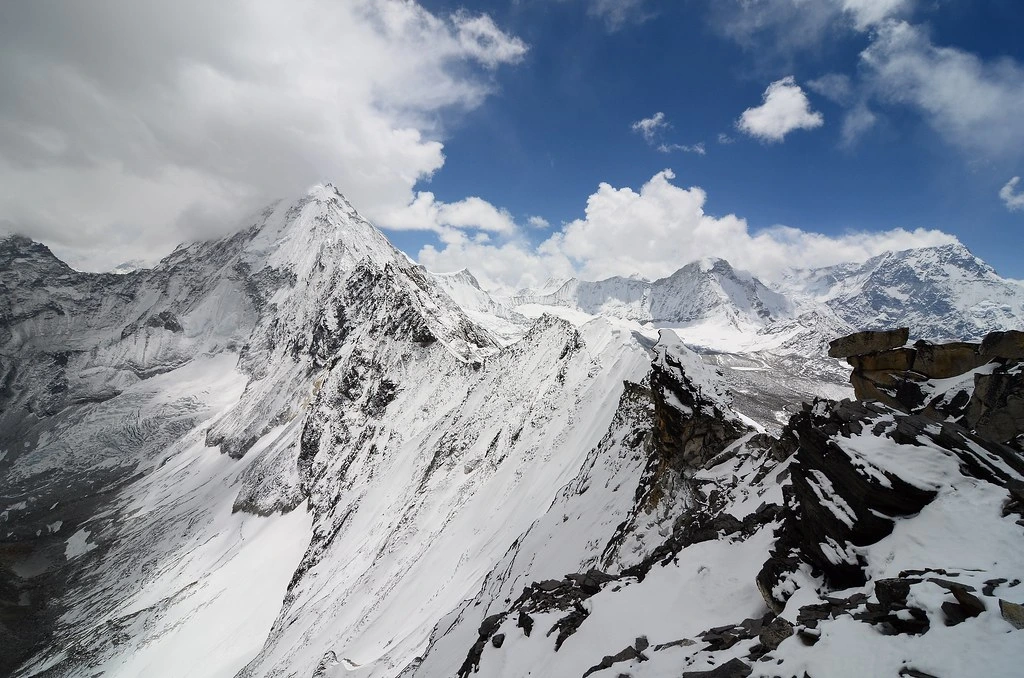
The Amphu Lapcha Pass is a gateway to some of the most spectacular mountain vistas in the world. From the wild upper Hongu Valley, trekkers are treated to unforgettable views of towering peaks, including Mera Peak and Island Peak. On a clear day, the vistas from Mera Peak are unmatched, with views extending to Everest, Kanchenjunga, Makalu, Lhotse, Cho-Oyu, and a host of other mighty peaks that dominate the Himalayan skyline.
The region is also home to serene lakes like Hongu Lake and Panch Pokhari Lake, adding an element of tranquility to the rugged adventure. For those seeking more than just a physical challenge, the journey through the stunning wilderness offers a sense of peace and awe that’s truly unique.
Meet Our Team
Our adventure begins in Khare, where you’ll meet our expert Sherpa guides and climbing team. They’ll lead you up Mera Peak, guiding you through the Hinku Valley and the Amphu Lapcha Pass, before dropping you off in Chhukung to begin your journey toward Island Peak.
The second part of our team is based in Chhukung. After crossing Amphu Lapcha, you’ll rest here for a day, preparing for the next phase of your adventure—summiting Island Peak. Our Chhukung-based team will guide you to Island Peak Base Camp, and the following day, you’ll ascend to the summit (6,189 meters / 20,305 feet) before returning to Chhukung to complete the expedition.
Preparing for the Amphu Lapcha Pass Trek
- Fitness and Training: Given the technical nature and high altitude of the Amphu Lapcha Pass trek, physical conditioning is crucial. Endurance, strength, and cardiovascular fitness are key to tackling the challenges of this trek. Some previous mountaineering experience will also be helpful, especially for the technical aspects of the Amphu Lapcha Pass.
- Permits : Several permits are required for this trek, including the Sagarmatha National Park Permit, Makalu Barun National Park Permit, and a TIMS (Trekkers’ Information Management System) card. These permits are essential for trekking through the protected areas along the route.
- Gear : Essential gear includes high-quality trekking boots, cold-weather clothing, a sleeping bag rated for high-altitude temperatures, climbing equipment (if attempting peaks), and a first aid kit. Given the remote nature of the trek, carrying the right equipment is paramount for safety and comfort.
Best Time to Trek
The best seasons to undertake the Amphu Lapcha Pass trek are pre-monsoon (April to early June) and post-monsoon (September to December). These windows provide the clearest skies, stable weather conditions, and the best views of the surrounding peaks.
Outline Itinerary
Day 01: Kathmandu to Lukla (Tenzing-Hillary Airport) – Trek to Chutanga (3,020 m/9,980 ft) – 4-5 hrs
Day 02: Trek to Thuli Kharka (4,300 m/14,107 ft) – 5-6 hrs
Day 03: Trek to Thangnak (4,356 m/14,291 ft) – 5-6 hrs
Day 04: Trek to Khare (5,045 m/16,551 ft) – 3-4 hrs
Day 05: Acclimatization Day at Khare
Day 06: Trek to Kongme Dingma (4,850 m/15,912 ft) – 5-6 hrs
Day 07: Trek to Seto Pokhari (5,035 m/17,503 ft) – 5-6 hrs
Day 08: Trek to Amphu Lapcha Base Camp South (5,650 m/18,536 ft) – 5-6 hrs
Day 09: Trek to Chhukung (4,750 m/15,580 ft) via Amphu Lapcha Pass (6,461 m/21,907 ft) – 9-10 hrs
Day 10: Trek to Tengboche Monastery (3,860 m/12,665 ft) – 4-5 hrs
Day 11: Trek to Namche Bazaar (3,440 m/11,287 ft) – 4-5 hrs
Day 12: Trek to Lukla (2,860 m/9,383 ft) – 6-7 hrs
Day 13: Fly from Lukla to Kathmandu – 30-minute flight
Challenges of the Amphu Lapcha Pass Trek
- Altitude: Due to the high-altitude nature of the trek, Acute Mountain Sickness (AMS) is a risk. Proper acclimatization is crucial to ensure your safety and well-being.
- Technical Difficulty: The Amphu Lapcha Pass requires mountaineering skills, including the use of ropes, crampons, and ice axes. The route is steep, with glacier crossings and challenging rock faces.
- Weather: Weather conditions can be unpredictable and harsh. Cold temperatures, strong winds, and snowstorms are common, so it’s important to be well-prepared for extreme conditions.
Why Trek with RP Adventure P. Ltd?
- Expert Guides & Support Team: Our experienced team ensures your safety and success every step of the way.
- Customizable Packages: Tailor your trekking experience to your needs and preferences.
- Responsible Tourism: We prioritize environmental sustainability and cultural respect.
- Unmatched Adventure: Take on the stunning beauty of Mera Peak and Amphu Lapcha Pass, some of Nepal’s most remote and challenging areas.
Conclusion
The Amphu Lapcha Pass trek is an epic adventure for seasoned trekkers and mountaineers looking to push their limits in one of the world’s most beautiful and remote regions. With a combination of high-altitude trekking and technical climbing, this trek offers a truly unique experience. Proper preparation, fitness, and an adventurous spirit are essential for completing this once-in-a-lifetime journey. The challenge is significant, but the rewards breathtaking views, a sense of achievement, and an unforgettable adventure are beyond measure.
Alternative Treks Around Amphu Lapcha Pass Trek
The Amphu Lapcha Pass Trek is a thrilling and technical adventure in the Everest region, crossing the challenging Amphu Lapcha Pass (5,845m) and offering spectacular views of Lhotse, Makalu, and Ama Dablam. It’s an ideal trek for experienced adventurers looking for an off-the-beaten-path experience in Nepal’s remote Himalayan wilderness.
If you’re searching for similar high-altitude treks with a mix of adventure, breathtaking scenery, and fewer crowds, here are some excellent alternatives:
- Everest Three High Passes Trek – 20 Days: A classic circuit through Everest’s highest and wildest passes with epic scenery.
- Makalu Base Camp Trek – 16 Days: A quiet, rugged trek to the base of the world’s fifth-highest mountain.
Detailed Itinerary
-
Day 01: Kathmandu to Lukla (Tenzing-Hillary Airport) - Trek to Chutanga (3,020 m/9,980 ft) - 4-5 hrs.
Kick off your adventure with a scenic 30-minute flight from Kathmandu to Lukla, known for its thrilling airport perched at the foot of the mountains. Upon arrival in Lukla, you'll have time to organize your gear before setting out on your first trek towards Chutanga. The trail passes through small farmhouses, and the beautiful surroundings of hills and valleys will take your breath away. Chutanga, with its green meadows, rhododendron, and pine forests, offers a peaceful setting for your first overnight camp.
Altitude: 3,020 mMeals: Breakfast / lunch / DinnerAccommodation: Tea House -
Day 02: Trek to Thuli Kharka (4,300 m/14,107 ft) - 5-6 hrs.
This day begins with a steep climb up to the Kalo Himal Ridge, also known as Nau-Lekh, which separates the Khumbu region from the Makalu Barun National Park. After a challenging ascent, you'll reach the Zatrwa La Pass at 4,600 m, offering views of the Dudh Kosi River valley, Karyolung, and Lumding Himal. A descent brings you to Thuli Kharka, where you'll set up camp for the night in a secluded area within the Inkhul Valley.
Altitude: 4,300 mMeals: Breakfast / lunch / DinnerAccommodation: Tea house -
Day 03: Trek to Thangnak (4,356 m/14,291 ft) - 5-6 hrs.
After breakfast, begin your descent with amazing views of Peak 43 and Kusum Kanguru. As you move through the serene rhododendron and pine forests, you'll continue towards Mousom Kharka, a settlement by the Inkhu Drangka River. From here, the trail leads north to the open valley of Gondishung, home to a 200-year-old Gompa (monastery). After an hour of walking, reach Thangnak, a small settlement of yak herders with a few tea houses for a restful night.
Altitude: 4,356 mMeals: Breakfast / lunch / DinnerAccommodation: Tea house -
Day 04: Trek to Khare (5,045 m/16,551 ft) - 3-4 hrs.
From Thangnak, embark on a moderate climb that takes you through beautiful alpine terrain. Crossing a moraine, you'll encounter Charpatti Tal (a glacial lake) and a high area dotted with cairns. As you continue, a short descent brings you to Dig Kharka, and then a final ascent leads you to Khare, a small settlement where you’ll rest for the night in preparation for the climb ahead.
Altitude: 5,045 mMeals: Breakfast / lunch / DinnerAccommodation: Tea house -
Day 05: Acclimatization Day at Khare
This is your rest and acclimatization day at Khare, where you'll prepare for the technical climbing ahead. Spend the day familiarizing yourself with climbing equipment such as crampons, ice axes, carabiners, and figure-eight descenders. Our expert guides will provide a practical session on how to use these tools safely on rocks and ice.
Altitude: 5,045 mMeals: Breakfast / lunch / DinnerAccommodation: Tea house -
Day 06: Trek to Kongme Dingma (4,850 m/15,912 ft) - 5-6 hrs
Your trek today takes you across the Mera Glacier, traversing ice sections and enjoying spectacular views of the surrounding peaks. The route leads you through remote and dry terrain, eventually reaching Kongme Dingma, where you’ll camp for the night in this peaceful, isolated area.
Altitude: 4,850 mMeals: Breakfast / lunch / DinnerAccommodation: Tea house -
Day 07: Trek to Seto Pokhari (5,035 m/17,503 ft) 5-6 hrs.
Today’s trek begins with a gradual climb followed by a steep ascent over moraine and rocky glaciers. You'll pass old and new moraine deposits before reaching Seto Pokhari— a stunning area with five beautiful ponds surrounded by rugged terrain. Set up camp here for the night at this serene, high-altitude spot.
Altitude: 5,035 mMeals: Breakfast / lunch / DinnerAccommodation: Tea house -
Day 08: Trek to Amphu Lapcha Base Camp South (5,650 m/18,536 ft) - 5-6 hrs.
Leaving Seto Pokhari, you'll ascend the moraine and cross some rocky terrain, with sections of ice and small streams to navigate. The final stretch brings you to the base of Amphu Lapcha Pass, where you'll camp and prepare for the next day’s challenging crossing. In the afternoon, our expert guides will check the route and fix ropes where necessary to ensure a safe and secure passage across the pass.
Altitude: 5,650 mMeals: Breakfast / lunch / DinnerAccommodation: Tea house -
Day 09: Trek to Chhukung (4,750 m/15,580 ft) via Amphu Lapcha Pass (6,461 m/21,907 ft) - 9-10 hrs
This is the toughest day of the trek, as you will cross the Amphu Lapcha Pass. Starting early, you'll climb steeply for a few hours before reaching the top of the pass, where you’ll be rewarded with panoramic views of surrounding peaks and the Imjatse Valley. After taking in the spectacular scenery, descend carefully with the aid of fixed ropes, crossing ice and snow sections. The descent continues to the Imja-Tse Valley, eventually reaching Chhukung for a well-earned rest in a cozy lodge.
Altitude: 4,750 mMeals: Breakfast / lunch / DinnerAccommodation: Tea house -
Day 10: Trek to Tengboche Monastery (3,860 m/12,665 ft) - 4-5 hrs.
From Chhukung, the trek takes you downhill through Dingboche, where you’ll be greeted by views of towering peaks like Amadablam, Nuptse, and Lhotse. The trail leads you into the forest and down to the Imjatse River. After crossing the river, you’ll climb to Tengboche, home to one of the most famous monasteries in the Khumbu region. Here, you'll enjoy breathtaking views of the surrounding mountains, making for a memorable overnight stay.
Altitude: 3,860 mMeals: Breakfast / lunch / DinnerAccommodation: Tea house -
Day 11: Trek to Namche Bazaar (3,440 m/11,287 ft) 4-5 hrs.
Your day begins with a long descent to the Imjatse River, followed by a short climb to the Sagarmatha National Park entrance. From here, a winding path leads you to Namche Bazaar, the bustling hub of the Khumbu region. Enjoy the vibrant atmosphere of this mountain town, with its shops, bakeries, and restaurants. Spend your afternoon exploring or relaxing before your final descent.
Altitude: 3,440 mMeals: Breakfast / lunch / DinnerAccommodation: Tea house -
Day 12: Trek to Lukla (2,860 m/9,383 ft) - 6-7 hrs
On the final day of trekking, you’ll retrace your steps back to Lukla, passing through the village of Monjo and trekking along the Dudh Kosi River. After a long day’s walk, you’ll arrive back in Lukla and enjoy your final evening in the mountains with a celebratory dinner with your guides and porters.
Altitude: 2,860 mMeals: Breakfast / lunch / DinnerAccommodation: Tea house -
Day 13: Fly from Lukla to Kathmandu - 30-minute flight
After an unforgettable adventure, take an early morning flight back to Kathmandu. Flights can sometimes be delayed due to weather, but once you land in Kathmandu, a short drive will bring you to your hotel where you can relax and reflect on your incredible journey through the Everest region.
Altitude: 1,300mMeals: Breakfast
What's included
- Airport Transfers: Pick up and drop
- Guide: An Experience English speaking guide and porter (1 porter for every 2 trekkers)
- Meals: All Meals, Tea and Coffee during the trek
- Teahouse accommodation: Teahouse accommodation during the trek with attached room
- Domestic flights: Kathmandu to Lukla Flight Ticket (Round Trip)
- Permits: All required trekking permits (National Park Entry Fee)
- Guide and porter insurance with food and accommodation
- Basic Medical kits
- Sleeping and duffel bag, down jacket, trekking poles (should be returned after the trek)
- Farewell dinner
- Emergency Helicopter Evacuation Service Arrangement Only (should cover by your travel insurance)
- All required paper works and government taxes
- RP Adventures T-shirt.
What's not included
- International Flight
- Nepal Travel Visa Fee
- Personal Medical and Travel insurance (Should cover helicopter evacuation)
- Sharing Helicopter/Charter Helicopter Service
- Guide, Porter and Driver tips
- Personal Gears (equipment)
- Personal bill
- Lunch and Dinner in Kathmandu
- All other personal expense of beverages (hard and soft drinks)
- All other things not mentioned in the inclusion
Trip You May Like
Mardi Himal View-Point Trek – 10 Days
Ganesh Himal Camping Trek – 14 Days
Makalu Base Camp Trek – 16 Days