What is Maha Shivaratri? Understanding the Sacred Night of Shiva
Maha Shivaratri, translating to “The Great Night of Shiva,” stands as one of Hinduism’s most spiritually significant festivals. Observed annually on the new moon day of the Hindu month of Falgun (February or March), this sacred occasion honors Lord Shiva, the deity of transformation and consciousness within the Hindu trinity.
For devotees worldwide, Maha Shivaratri represents far more than a religious observance. It symbolizes the cosmic marriage of Lord Shiva and Goddess Parvati, embodying the divine union of consciousness and energy. According to Hindu scriptures, this is also the night when Shiva performed the celestial Tandava, a cosmic dance representing the eternal cycle of creation, preservation, and destruction.
The festival’s spiritual essence lies in its practices: fasting throughout the day, night-long vigils filled with prayer and meditation, and offerings made to Shiva Lingas. Devotees believe these acts purify the soul, awaken inner consciousness, and help transcend ego and worldly attachments. The night is divided into four Prahars , each marked by special prayers and rituals that deepen the spiritual connection with the divine.
The Spiritual Significance of Maha Shivaratri
Beyond mythology, Maha Shivaratri holds profound philosophical meaning. The darkness of the new moon night symbolizes ignorance, while the vigil represents the quest for enlightenment. Staying awake through the night signifies spiritual alertness and the commitment to overcome spiritual darkness through devotion and self-discipline.
The festival transcends social boundaries, bringing together people from all walks of life regardless of caste, creed, or economic status in shared devotion. This unity reflects Shiva’s nature as Mahadeva, the great god who accepts all sincere seekers.
Pashupatinath Temple: Nepal’s Crown Jewel of Shiva Worship
Historical and Religious Significance
Pashupatinath Temple, situated on the sacred banks of the Bagmati River in Kathmandu, is not merely a place of worship. It is the spiritual heart of Nepal and one of the most revered Shiva temples in the world. Recognized as a UNESCO World Heritage Site since 1979, this ancient temple complex dates back centuries, with references found in texts as early as 400 CE.
The name “Pashupatinath” means “Lord of all beings,” reflecting Shiva’s role as the supreme protector. The temple’s main deity is a four-faced Shiva Linga made of black stone, considered one of the most sacred manifestations of Lord Shiva anywhere on earth.
Why Pashupatinath is Sacred
For Hindus, Pashupatinath holds a significance comparable to the twelve Jyotirlingas of India. The temple serves multiple spiritual purposes.
- Sacred Cremation Ground: The ghats along the Bagmati River at Pashupatinath are revered cremation sites. Hindus believe that those cremated here achieve moksha, liberation from the cycle of birth and death, and their souls unite with the divine.
- Architectural Marvel: The main temple showcases exquisite Nepalese pagoda-style architecture with a golden roof, silver doors, and intricate wood carvings. The complex includes smaller shrines, ashrams, and dharmashalas that create a complete spiritual ecosystem.
- Living Spiritual Tradition: Unlike many ancient temples that have become merely historical monuments, Pashupatinath thrives as a living center of Hindu practice, with daily pujas, continuous chanting, and an unbroken tradition of ritual worship.
- International Pilgrimage Center: The temple attracts millions of devotees annually from Nepal, India, and across the globe, making it a meeting point of cultures and spiritual traditions within the Shaivite faith.
Connection Between Lord Shiva and Pashupatinath
According to legend, Lord Shiva once took the form of a golden deer and rested in the forests of the Bagmati River valley. When gods sought him out, he refused to leave this peaceful sanctuary. During their attempts to bring him back, one of the deer’s horns broke and fell to the ground. This horn, buried in the earth, was later discovered as the sacred Linga that now resides in the temple.
This mythological connection makes Pashupatinath not just a temple built for Shiva, but a place where Shiva himself chose to manifest, adding immeasurable sanctity to the site.
Maha Shivaratri Celebration at Pashupatinath Temple
Why Pashupatinath Transforms During Maha Shivaratri
While Pashupatinath remains spiritually significant throughout the year, Maha Shivaratri transforms it into something extraordinary. The celebration here is unique for several compelling reasons.
- Unprecedented Scale: Over 700,000 devotees converge at Pashupatinath during Maha Shivaratri, creating one of the largest religious gatherings in South Asia. The temple complex, normally serene, becomes a vibrant sea of humanity united in devotion.
- National Holiday Status: Maha Shivaratri is a public holiday in Nepal, allowing the entire nation to participate. Government agencies coordinate with temple authorities to manage crowds, ensure safety, and facilitate smooth pilgrimage experiences.
- International Convergence: Devotees travel from India’s remotest villages and cities across South Asia to experience Shivaratri at Pashupatinath, believing the blessings received here carry special potency.
The Presence of Sadhus: Living Embodiments of Shiva
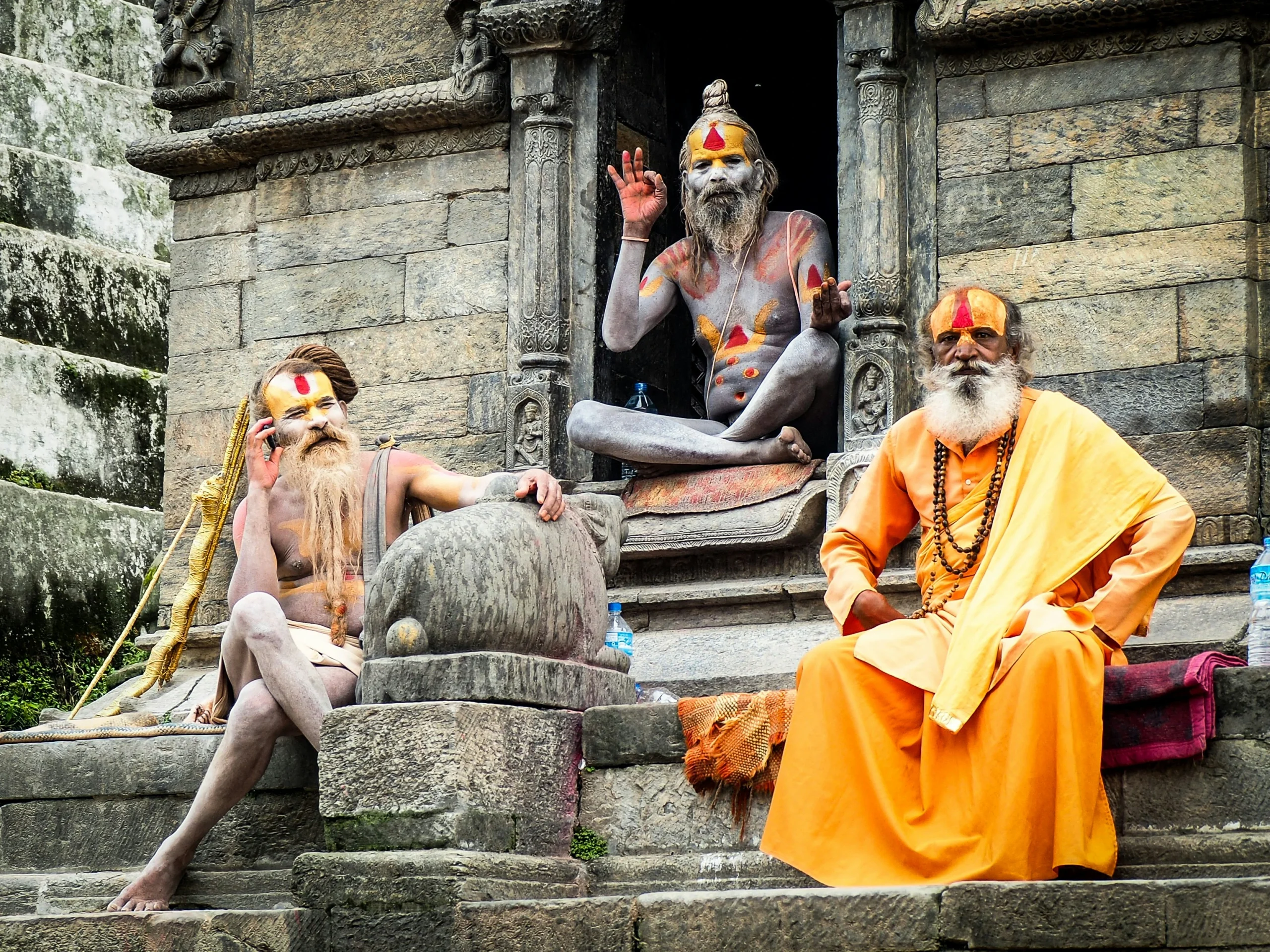
One of Maha Shivaratri’s most distinctive features at Pashupatinath is the gathering of sadhus. These are Hindu ascetics who have renounced worldly life to pursue spiritual enlightenment. During the festival, hundreds of sadhus descend upon the temple from across Nepal and India, particularly from regions like Varanasi, Haridwar, and the Himalayan caves.
These holy men, with their ash-covered bodies, matted hair, rudraksha beads, and saffron robes, represent living connections to ancient spiritual traditions. Many engage in intense meditation, perform extraordinary yogic practices, and consume cannabis (bhang) as a ritual offering to Shiva, who is believed to have used such substances for deep meditation.
Their presence adds a mystical dimension to the celebration, offering devotees and visitors alike a glimpse into a lifestyle of complete surrender to the divine.
Major Rituals and Spiritual Atmosphere
The Maha Shivaratri celebration at Pashupatinath unfolds through several powerful rituals.
- Jalabhishek (Sacred Bathing of the Linga): Devotees queue for hours to pour milk, honey, yogurt, ghee, and Ganges water over the Shiva Linga while chanting “Om Namah Shivaya.” This abhishekam symbolizes purification and the washing away of sins.
- Night-Long Vigil (Jagran): The temple remains open throughout the night, with continuous chanting, bhajan singing, and recitation of sacred texts like the Shiva Purana and Rudram. The atmosphere resonates with spiritual energy as thousands maintain their vigil until dawn.
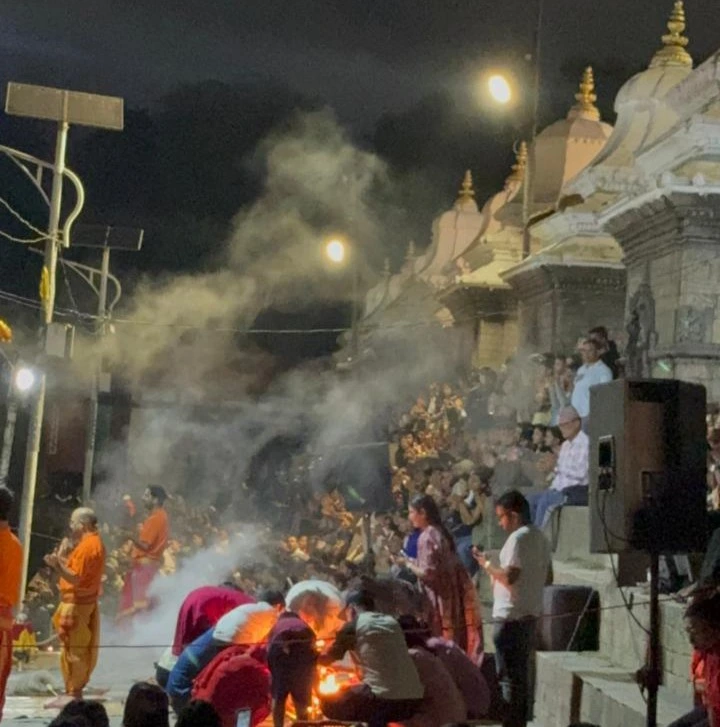
- Sandhya Arati: The evening arati performed along the Bagmati River is breathtaking. Hundreds of lamps are lit simultaneously, creating a river of light that reflects off the water while priests perform synchronized rituals accompanied by bells, drums, and sacred chants.
- Bonfire Ceremonies: Large bonfires are lit throughout the night, symbolizing the burning of ignorance and the awakening of knowledge. Devotees gather around these fires for warmth and spiritual contemplation.
- Offering of Bilva Leaves: The three-petaled bilva (bael) leaf, sacred to Shiva, is offered in abundance. Each leaf represents the trinity of creation, and offering them is believed to please Shiva and remove negative karma.
Cultural and Religious Importance for Nepal
For Nepal, Maha Shivaratri at Pashupatinath represents national identity and pride. As the world’s only Hindu kingdom until 2008 (now a secular state with deep Hindu cultural roots), Nepal views Pashupatinath as a symbol of its spiritual heritage.
The festival brings significant economic benefits through religious tourism, supporting local businesses, hotels, and artisans. More importantly, it reinforces cultural continuity, with younger generations participating in ancient traditions and maintaining connections to their ancestral faith.
Maha Shivaratri in India vs Nepal: A Comparative Perspective
While Maha Shivaratri is celebrated with devotion in both countries, distinct differences in scale, cultural practices, and religious focus create unique experiences.
Comparative Analysis
| Aspect | Maha Shivaratri in India | Maha Shivaratri in Nepal |
| Public Holiday Status | Public holiday in most states; varies by region | National public holiday across entire country |
| Primary Temple Focus | Distributed across multiple major sites (Varanasi’s Kashi Vishwanath, Tamil Nadu’s Chidambaram, Ujjain’s Mahakaleshwar, Kedarnath) | Centralized celebration at Pashupatinath Temple in Kathmandu and All the Shiva Temples and Dham |
| Scale of Celebration | Massive but dispersed across vast geography; each temple city has its own major celebration | Concentrated gathering creating one of South Asia’s largest single-location religious events |
| Government Involvement | Limited coordination except at major pilgrimage sites; primarily temple trust management | Extensive government coordination with temple authorities for crowd management, security, and facilities |
| Cultural Practices | Varies significantly by region. South Indian temple rituals differ from North Indian practices; local languages and customs shape celebrations | More uniform celebration style influenced by Nepali Hindu traditions; Newari Buddhist elements sometimes blend in |
| Ritual Emphasis | Strong focus on temple-specific traditions and regional deities associated with Shiva | Central focus on the Pashupatinath deity; incorporation of Tantric practices more visible |
| Sadhu Congregation | Large gatherings at Varanasi, Haridwar, and Rishikesh; sadhus remain in their respective regions | Sadhus migrate specifically to Pashupatinath, creating concentrated gathering from across South Asia |
| International Pilgrimage | Primarily domestic pilgrimage with some international Hindu devotees | Significant cross-border pilgrimage from India; strong tradition of Indian devotees traveling to Nepal |
| Cannabis Use | Officially restricted though traditional use continues discreetly in some areas | More openly practiced and tolerated during Shivaratri as religious offering, especially among sadhus |
| Duration of Festivities | Generally one night and following day | Extended multi-day celebration with preparations beginning days before |
Key Differences in Practice and Experience
- Temple Access and Architecture: Indian Shiva temples display diverse architectural styles. Dravidian gopurams in the south, North Indian shikhara spires, and rock-cut cave temples. Pashupatinath presents distinctly Nepali pagoda architecture with Himalayan cultural elements.
- Linguistic and Cultural Expression: Indian celebrations incorporate Sanskrit prayers in regional languages like Tamil, Telugu, Bengali, and Hindi, creating varied devotional expressions. Nepal’s celebration uses Nepali and Sanskrit, with more linguistic uniformity.
- Fasting Traditions: While both countries observe fasting, Nepali traditions often include consuming specific foods like fruits and dairy products after nightfall. Some Indian regions practice complete abstinence (nirjala vrata) until the following morning.
- Community Participation: In India, Shivaratri celebrations vary from family-centered temple visits to massive public events. Nepal’s celebration assumes a more collective national character, with families traveling from rural areas to Kathmandu specifically for Pashupatinath darshan.
- Cultural Integration: India’s celebration often integrates regional folk traditions. In Punjab, it might include cultural performances; in Bengal, women perform specific folk rituals. Nepal’s celebration maintains stronger consistency with Vedic and Puranic traditions with less regional variation.
Visitor and Cultural Insights: Experiencing Maha Shivaratri
What Pilgrims and Visitors Can Expect
- Overwhelming Crowds: Prepare for dense crowds, especially from early morning through midnight. The queue for main temple darshan can extend several hours. Patience and mental preparation are essential.
- Intense Spiritual Energy: The atmosphere is charged with devotional fervor. Continuous chanting, drumbeats, conch shells, and bells create an all-encompassing sensory experience that can be overwhelming yet profoundly moving.
- Cultural Immersion: Visitors witness authentic Hindu traditions in their living form, from elaborate priestly rituals to simple offerings by villagers who have walked for days to reach the temple.
- Photographic Opportunities: The visual spectacle of thousands of lamps colorfully dressed devotees, ash-covered sadhus, and ancient temple architecture provides remarkable photographic moments. Always ask permission before photographing people, especially sadhus.
- Physical Demands: The celebration involves extensive standing, walking, and navigating crowds in variable weather conditions. Physical fitness and appropriate clothing are important.
Cultural Etiquette and Respectful Behavior
- Dress Modestly: Cover shoulders and knees. Traditional Indian or Nepali clothing is most appropriate. Remove shoes before entering temple premises.
- Photography Restrictions: The main sanctum prohibits photography. Always observe posted signs and ask permission before photographing rituals or people.
- Sacred Spaces: The cremation ghats are active sites of deeply personal religious ceremonies. Observe from designated viewing areas with appropriate reverence and restraint.
- Offerings and Donations: If participating in rituals, make offerings respectfully. Support local vendors selling puja materials rather than bringing outside items.
- Language and Interaction: Learn basic greetings in Nepali (“Namaste” for hello, “Dhanyabad” for thank you). Most people appreciate respectful attempts to engage with local language and customs.
- Cannabis and Bhang: While traditional for sadhus, visitors should understand that consuming these substances may be legally restricted and is culturally appropriate only within specific religious contexts. Tourists should not treat this as recreational activity.
- Crowd Navigation: Move slowly and calmly through crowds. Expect physical contact in dense areas. Protect valuables and maintain awareness of surroundings.
- Environmental Respect: The Bagmati River is sacred. Do not litter. Participate in cleanup efforts if available, supporting local environmental initiatives.
Practical Considerations
- Accommodation: Book hotels or guesthouses months in advance. Areas near Pashupatinath fill quickly. Consider staying in Thamel or other central Kathmandu locations with good transport links.
- Transportation: Roads around Pashupatinath become congested. Plan to walk considerable distances or arrange transport well in advance. Arrive early in the morning or late evening to avoid peak crowding.
- Health and Safety: Stay hydrated despite fasting traditions if you’re observing. Be prepared for cool evening temperatures. Keep emergency contacts accessible.
- Festival Dates: Maha Shivaratri follows the lunar calendar. Verify exact dates for your travel year, as they shift annually in the Gregorian calendar.
- Border Crossings: Indian pilgrims crossing into Nepal should carry appropriate identification and understand current visa requirements and border procedures.
Conclusion: The Unparalleled Spiritual Depth of Maha Shivaratri at Pashupatinath
Experiencing Maha Shivaratri at Pashupatinath Temple offers something that transcends ordinary pilgrimage. While India hosts magnificent Shivaratri celebrations across its vast landscape, Nepal’s concentrated devotion at this single, supremely sacred site creates an intensity of spiritual energy found nowhere else.
The convergence of hundreds of thousands of devotees in one location, all united in worship of the same manifestation of Shiva, generates a collective spiritual force that participants describe as transformative. The visible presence of sadhus, the continuous flow of the Bagmati River carrying prayers and offerings, and the ancient sanctity of Pashupatinath combine to create an atmosphere where the boundary between physical and spiritual realms seems permeable.
For international visitors and pilgrims, Maha Shivaratri at Pashupatinath provides insight into Hinduism’s living traditions. Not as museum pieces or historical curiosities, but as vibrant, actively practiced faith. The festival demonstrates how ancient wisdom traditions continue to shape modern life, offering paths to meaning, community, and transcendence in an increasingly fragmented world.
Whether you approach as a devoted pilgrim seeking Shiva’s blessings, a cultural enthusiast exploring Himalayan traditions, or a spiritual seeker investigating humanity’s diverse paths to the divine, Maha Shivaratri at Pashupatinath promises an experience of profound depth. It reminds us that in certain places, at certain times, the sacred breaks through into everyday reality with unmistakable power. For one remarkable night each year, Pashupatinath becomes such a place, illuminated by the devotion of countless hearts seeking connection with the eternal.
Posted on