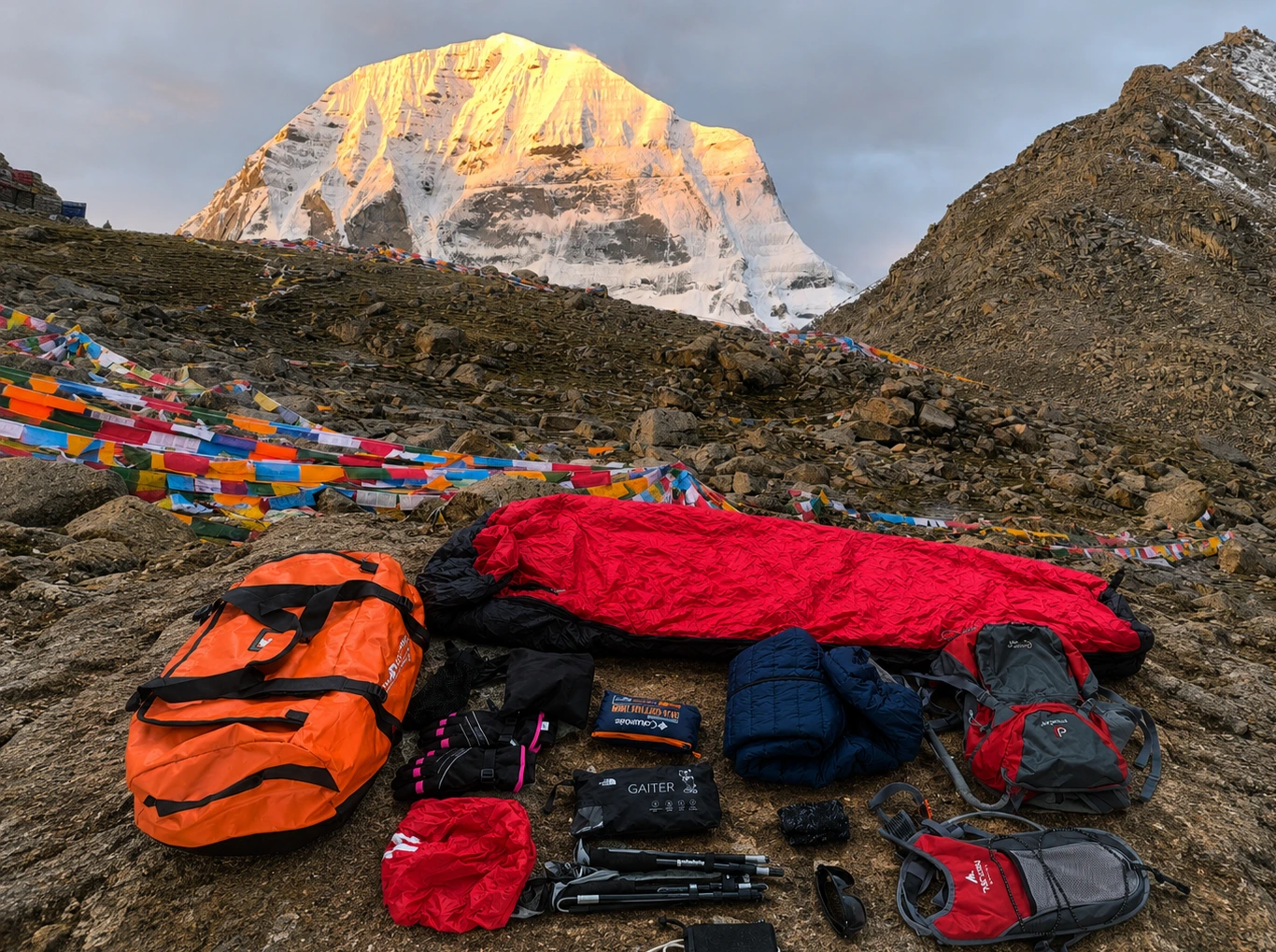
Mount Kailash stands at 6,638 meters in the remote Ngari region of Tibet, revered by millions as one of the world’s most sacred mountains. For Hindus, Buddhists, Jains, and Bon followers, a pilgrimage here represents a profound spiritual journey. But reaching this sacred peak isn’t a typical vacation—it’s a challenging high-altitude expedition that demands serious preparation.
Many pilgrims underestimate the physical demands of this trek. The combination of extreme altitude, unpredictable weather, and remote terrain means that what you pack can literally make the difference between a transformative spiritual experience and a miserable struggle.
At RP Adventures, we’ve guided thousands of pilgrims on this sacred journey. Through years of experience, we’ve learned exactly what works and what doesn’t. This guide shares our insider knowledge to help you pack properly for your Mount Kailash adventure.
Why Proper Packing Matters for Kailash Yatra
The Kailash pilgrimage isn’t like trekking in popular tourist destinations. There are no nearby shops, limited accommodation options, and virtually no way to buy forgotten items once you start.
Here’s what makes packing crucial:
- You’re going to extreme altitude – Your body will struggle with less oxygen. Every extra pound you carry makes breathing harder and fatigue worse.
- Weather changes fast – A sunny morning can turn into a snowstorm by afternoon. You need the right layers to stay safe and comfortable.
- You’ll walk 10-15 hours some days – Proper footwear and gear prevent injuries that could end your pilgrimage early.
- Medical help is far away – If something goes wrong, you can’t just run to a pharmacy. You need to carry medicines and first-aid supplies.
- The cold is serious – Temperatures drop to -5°C or lower at night. Poor preparation leads to frostbite and hypothermia.
The golden rule? Pack only what you truly need, but ensure you have everything essential. Leave behind the luxury items. Bring what keeps you safe and healthy.
Weather and Altitude Conditions Around Mount Kailash
Before you start packing, you need to understand what you’re walking into.
Temperature Range:
- Daytime: +5°C to +12°C (depending on the location and season)
- Nighttime: -5°C to -15°C (especially near Dolma La Pass at 5,645 meters)
- Windchill makes it feel much colder
Altitude Levels:
- Starting point (Kathmandu): 1,400m
- Kailash base areas: 4,500-5,000m
- Dolma La Pass: 5,645m
- Mount Kailash summit: 6,638m
What This Means for Your Body: At 4,500+ meters, oxygen levels are roughly half what they are at sea level. Your lungs work harder. Your heart races. Sleep becomes difficult. This is why acclimatization matters and why overpacking causes real problems – every extra kilogram makes breathing harder.
Weather Characteristics:
- Morning: Clear skies and strong UV rays
- Afternoon: Sudden wind and possible snow
- Night: Freezing temperatures and clear skies
- Rain is rare but possible in lower elevations
Understanding this helps you see why every item in your pack serves a purpose.
Essential Documents You Must Carry
Your physical gear is important, but your documents are critical. Without the right paperwork, you won’t even reach the mountain.
Passport
Your passport must be valid for at least 6 months beyond your travel dates. More importantly, it needs at least 3 completely empty pages for stamps and visas. Check this before booking your trip—passport processing takes time.
China Visa
You cannot enter Tibet without a valid Chinese visa. Group visas are arranged through your tour operator (like RP Adventures). Everyone in the group must enter and exit China on the same dates. Being late isn’t an option—it affects the entire group.
Tibet Travel Permits
Mount Kailash sits in a restricted area designated by the Chinese government. You cannot visit independently. A permit is mandatory, and it’s issued only to organized groups through registered operators. Your tour operator handles this, but you need to be officially listed.
Travel Insurance
While not legally required, we strongly recommend comprehensive travel insurance that covers:
- High-altitude trekking
- Emergency medical evacuation
- Trip cancellation
- Adventure activities
At this altitude, evacuation costs can exceed $5,000. Insurance protects you and your family.
Other Important Documents
- Original booking confirmation
- Vaccination records (check current requirements for China)
- Copies of your passport (store separately from the original)
- Doctor’s letter if carrying prescription medications
Clothing: The Layering Strategy That Works
Clothing is your primary defense against altitude, cold, and weather. The key principle is layering—never try to stay warm with one thick jacket.
Base Layer (Thermal Wear)
Your skin touches this layer first. It needs to wick moisture away from your body.
What to Pack:
- 2-3 thermal underwear sets (merino wool or synthetic blend)
- Lightweight long-sleeve shirts (2-3)
- Avoid cotton – it holds moisture and makes you colder
Mid Layer (Insulation)
This traps warm air around your body.
What to Pack:
- 1-2 fleece jackets or wool sweaters
- 1 lightweight down vest (for layering under your jacket)
Outer Layer (Protection)
This shields you from wind and rain.
What to Pack:
- Waterproof, windproof jacket with sealed seams
- Waterproof, windproof pants (not jeans—they trap cold and moisture)
Lower Body
Your legs need the same layering approach as your torso.
What to Pack:
- 2-3 thermal bottoms (merino wool preferred)
- Trekking pants or convertible pants with zip-off legs (for temperature changes)
- 1 waterproof outer pant for rain and snow
Head and Extremities
You lose tremendous heat through your head. Protect your face, ears, and hands.
What to Pack:
- Warm beanie or balaclava that covers your ears
- Lightweight neck gaiter or scarf (doubles as face protection)
- 1 pair of lightweight gloves (for milder moments)
- 1 pair of heavier, waterproof insulated gloves (for extreme cold)
Total Clothing Weight
Don’t overpack “just in case.” Two complete outfit sets plus extras is plenty. You’ll wash clothes occasionally at lodges.
Footwear: Your Foundation for 50+ Kilometers of Walking
Your feet carry you for 50+ kilometers around Mount Kailash. Bad footwear turns this into suffering. Good footwear makes the journey manageable.
Trekking Boots (The Most Important Purchase)
This is not the place to save money. Your boots are your most crucial piece of gear.
What to Look For:
- Waterproof, breathable membrane (Gore-Tex or similar)
- Insulated for cold temperatures
- Ankle support to prevent sprains on rocky terrain
- Good grip for icy and slippery surfaces
- Most importantly: Break them in before your trip
Wear your boots on walks at home. If you arrive with brand-new boots, blisters are almost guaranteed. Painful feet on day two mean five more days of misery.
Important Tip: Bring your boots even if the tour operator says they’ll provide them. Having your own broken-in boots is far better than risking new ones.
Camp Shoes or Sandals
After a day of walking, your feet desperately need relief.
What to Pack:
- Lightweight slip-on shoes or sandals
- Comfortable enough to wear for several hours
- Easy to take off and put on
These stay at your lodge and give your feet a break in the evenings.
Socks
More than most people think necessary.
What to Pack:
- 4-5 pairs of merino wool or synthetic blend socks (never cotton)
- Moisture-wicking is non-negotiable
- Bring extra because socks get damp from sweat
Trekking Gear and Equipment
Beyond clothing and footwear, several items make trekking safer and more comfortable.
Essential Gear
- Trekking poles – Reduce strain on knees and ankles, especially on descents
- Day backpack (20-30 liters) – Carries water, snacks, and daily essentials
- Duffel bag – Your main luggage (tour operators often provide)
- Sleeping bag – Even if lodges provide bedding, a lightweight sleeping bag liner protects against hygiene issues
What Tour Operators Usually Provide
- Main duffel bag (for storage at base)
- Down jacket (standard issue)
- Basic bedding at lodges
Nice-to-Have Items
- Sunglasses with UV protection (UV rays are intense at altitude)
- Hat for daytime sun protection
- Gaiters to keep debris out of your boots
Medicines and Health Essentials for High Altitude
This section could save your pilgrimage or your life.
Altitude Sickness Prevention and Treatment
Altitude sickness is real. It’s not weakness; it’s your body’s reaction to thin air.
Medications to Consider (consult your doctor first):
- Diamox (Acetazolamide) – Taken before altitude to help acclimatization
- Ibuprofen or Naproxen – For altitude-related headaches
- Ginger tablets – Natural remedy for nausea
Your Personal Medications
If you take any regular medications, bring enough for your entire trip plus 5 extra days. Don’t rely on finding them locally.
Pain and Symptom Relief
- Painkillers for headaches and body aches
- Anti-nausea tablets (common at altitude)
- Anti-diarrhea medication
- Antacid tablets
First Aid Supplies
- Antibiotic ointment or powder
- Bandages and adhesive tape
- Blister treatment kit (this is critical – blisters can end your trek)
- Zinc oxide tape for skin protection
- Elastic bandages for sprains
- Gauze pads and pain relief cream
Other Health Items
- Hand sanitizer (for hygiene between water access)
- Moisturizing cream (altitude dries your skin badly)
- Lip balm with SPF
- Eye drops (altitude and dry air irritate eyes)
- Face wipes
Important Health Notes
- Don’t hide symptoms of altitude sickness. Tell your guide immediately.
- Continue taking any regular medications without interruption.
- Most serious issues happen to people who don’t acclimatize properly—don’t rush the process.
- Your guides are experienced with altitude sickness and can help manage symptoms.
Food and Hydration: Staying Energized at High Altitude
Your body burns calories faster at altitude. You need proper nutrition and constant hydration.
Energy Foods to Pack
- Trail mix – Nuts, seeds, dried fruit, dark chocolate
- Energy bars – Choose ones with balanced carbs, protein, and fats
- Dried fruits – Lightweight and full of natural energy
- Dark chocolate – Boosts mood and provides quick energy
- Instant noodles or soup packets – Easy to prepare with hot water from your guide
What Tour Operators Provide
- Three meals daily at lodges
- Hot water for drinks throughout the day
- Some supply mineral water bottles
Hydration Strategy
- Drink more water than you think you need – your body loses moisture rapidly at altitude
- Don’t drink only cold water – warm or room-temperature water is easier to drink in large quantities
- Your guides provide hot water; this is your safest option
- If using water purification tablets, follow instructions carefully
Practical Packing
Pack high-calorie, lightweight snacks. Heavy food serves no purpose. A few good energy bars and some dried fruit are more valuable than a large variety of foods.
Important Items for Your Spiritual Journey
This pilgrimage is about spiritual connection. These items help you honor that intention.
Religious and Spiritual Items
- Prayer beads (Mala) – For counting mantras and meditation
- Prayer flags – You can bring your own to leave at sacred sites
- Prayer book or scripture – Something meaningful from your faith tradition
- Incense – Some pilgrims bring small amounts for personal practice
Respecting Sacred Spaces
When visiting monasteries and temples:
- Wear modest clothing (shoulders and knees covered)
- Remove hats inside buildings unless instructed otherwise
- Show respect through quiet and reverent behavior
- Offer small donations or traditional offerings (rice, coins, flowers)
- Ask permission before photographing sacred spaces
Practical Spiritual Advice
- Approach your pilgrimage with respect for all faiths and pilgrims
- Observe how local pilgrims practice and learn from them
- Your guides can explain customs and expectations
- Photography policies vary by location – always ask first
Toiletries and Personal Hygiene
Water is limited, but maintaining basic hygiene keeps you healthy.
Essential Toiletries
- Toothbrush and toothpaste (biodegradable options are better for the environment)
- Soap or body wash (small bar or travel bottle)
- Dry shampoo (actual shampooing happens rarely)
- Deodorant (to reduce odor when bathing isn’t possible)
- Toilet paper and tissues (bring your own – some lodges don’t provide)
Personal Care Items
- Small lightweight towel or quick-dry cloth
- Face wash and moisturizer (altitude severely dries your skin)
- Lip balm with SPF
- Eye drops (for dry, irritated eyes)
- Nail clippers and file
- Small hair comb or brush
- Contact lenses or glasses (bring extras)
Feminine Hygiene
- Pack your full monthly supply – products aren’t available along the route
- Bring a small sealed bag for disposal
- Plan timing if possible, as the pilgrimage isn’t ideal during menstruation
Waste Management
Don’t throw anything in toilets. Use provided trash bins, and if traveling in eco-conscious groups, pack out all non-biodegradable waste.
Electronics and Accessories
Modern pilgrims often want to stay connected and capture memories.
What to Bring
- Camera or smartphone – For documenting your journey
- Power bank – Charging options are extremely limited
- Extra batteries – Especially if using a camera
- Chargers and cables – One set; backup cables are light and useful
Reality Check
- Electricity is available only at main lodges, and outlets may be limited
- Charging points work on rotating schedules due to generator use
- Phone signal exists in some areas but is unreliable
- Don’t spend your pilgrimage glued to your phone – the spiritual experience matters more
What NOT to Bring
- Laptop or tablet
- Multiple cameras
- Expensive electronics you’d be devastated to lose
The altitude, dust, and harsh conditions are rough on electronics.
Daypack Essentials for Kailash Parikrama
Your day backpack holds items you need while walking each section.
Daily Essentials (in your 20–30-liter pack):
- Water bottle(s) – minimum 2 liters capacity
- Energy snacks – trail mix, bars, dried fruit
- Sunscreen and lip balm with SPF
- Sunglasses and sunhat
- Light rain jacket (even if skies are clear)
- Extra layers (fleece or down vest)
- Medications (pain relief, altitude sickness meds)
- Phone and camera
- Toilet paper and hand sanitizer
- Small first-aid kit for blisters or minor cuts
Why This Matters: Your daypack stays with you while walking. Leave it unbalanced or overloaded, and neck and shoulder pain will plague you. Keep it under 8-10 kilograms if possible.
Smart Packing Tips for Tibet and High Altitude Travel
After guiding thousands of pilgrims, we’ve learned what separates good packing from poor packing.
Before You Leave Home
- Make a detailed checklist – Don’t rely on memory
- Weigh your luggage – Airlines have weight limits, and heavy bags hurt at altitude
- Break in your boots – This cannot be overstated
- Test your gear – Wear your layers together to ensure they fit properly
- Get doctor clearance – Especially if you have health concerns
What to Actually Do
- Lay everything out – See what you’re bringing before it goes in your bag
- Use compression bags – They save tremendous space
- Roll clothes instead of folding – Takes up less room
- Keep your daypack separate – It’s not checked luggage
- Wear your heaviest items – On the plane, not in your luggage
What NOT to Pack
- New shoes – Only broken-in boots
- Heavy winter coats at home – You’ll wear them there
- More than one outfit per day – You wash clothes at lodges
- Unnecessary electronics – Your smartphone is enough
- Luxury items – Leave jewelry, expensive watches, and designer goods at home
- Thick jeans or cotton pants – They’re heavy and hold moisture
- Multiple pairs of shoes – Boots and camp shoes are enough
The Weight Reality
Every kilogram matters at 4,500+ meters. Overpacking doesn’t just mean excess luggage fees—it means struggling to breathe while carrying extra weight uphill.
Storage During Your Trek
- Your main duffel stays at base camps and lodges
- You only carry your daypack while walking
- This system protects your luggage and keeps you moving light
Things You Should NOT Carry
Just as important as knowing what to pack is knowing what to leave behind.
Don’t Pack:
- Heavy luggage – More than one duffel bag per person
- Unnecessary electronics – Laptops, tablets, multiple cameras
- Fashion clothing – Style doesn’t matter; function does
- Cotton clothing – Cotton holds moisture and loses insulating value
- Perfume or cologne – Leave it for after your pilgrimage
- Expensive jewelry or watches – Remote areas aren’t secure
- Extra shoes beyond hiking boots and camp shoes
- Books and heavy reading material
- Hair styling tools – No blow dryers; no hair straighteners
- Medications you don’t actually use
- Anything breakable or valuable
Frequently Asked Questions About Kailash Packing
What is the single most important thing to pack?
Proper trekking boots that are already broken in. Bad feet end treks. Everything else is secondary.
How cold does it actually get?
Daytime temperatures range from +5°C to +12°C, but nights drop to -5°C to -15°C. Wind makes it feel much colder. This is a serious cold, not mild coolness.
Do I really need a down jacket if the tour operator provides one?
Bringing one extra is wise. The provided jacket works, but having a backup means more flexibility if yours gets damaged or extremely wet.
Can beginners do this trek successfully?
Yes, but only with proper fitness, preparation, and the right gear. Start training 2-3 months before your trip. Build hiking fitness progressively.
What causes most packing mistakes?
Overpacking and bringing items “just in case.” Extra weight kills at altitude. Trust that your tour operator provides the rest.
How many complete outfit changes do I need?
Two or three sets maximum, plus extra socks and undergarments. You’ll wash clothes at lodges. Quality over quantity.
Is a sleeping bag really necessary?
Tour operators provide bedding, but a lightweight sleeping bag liner is recommended. It protects your health and gives you a comfort layer.
Can I charge electronics during the trek?
Limited charging exists at main lodges. Power banks are essential. Bring a quality one with high capacity.
What if I forgot something important?
Contact your tour operator immediately. They have solutions for most forgotten items and can advise on last-minute purchases in Kathmandu before you depart.
Is travel insurance really necessary?
Yes. Medical evacuation from Mount Kailash costs thousands of dollars. Insurance is non-negotiable.
How do I pack for such extreme temperature variations?
Layering. Never try to stay warm with one thick item. Multiple thin layers trap heat better and allow you to adjust as temperatures change.
What’s the best strategy for managing luggage?
Use one main duffel for storage at base and lodges, and carry only essential items in your day backpack while walking. This system works perfectly.
Are there shops where I can buy forgotten items?
Basic shops exist in Kathmandu, Kyirong, and Saga. Once you leave these towns, options vanish. Pack everything you need from the start.
Should I pack snacks or rely on provided meals?
Pack energy snacks for the trekking days. Meals at lodges are adequate, but having extra energy bars and trail mix during walking hours prevents energy crashes.
What’s the biggest mistake pilgrims make?
Bringing too much. Heavy luggage at altitude creates suffering, fatigue, and reduces your ability to enjoy the spiritual experience.
Final Packing Checklist
Use this checklist before your trip:
Documents
- Valid passport (6+ months validity, 3+ empty pages)
- Chinese visa
- Tibet travel permit
- Travel insurance documents
- Booking confirmations
- Vaccination records
Clothing
- 2-3 thermal underwear sets
- 2-3 long-sleeve shirts
- Fleece jacket
- Down jacket (or relying on tour operator’s)
- Waterproof/windproof jacket
- 2-3 thermal bottoms
- Trekking pants (convertible preferred)
- Waterproof/windproof pants
- Warm beanie
- Neck gaiter or scarf
- 2 pairs of gloves (lightweight and insulated)
- 4-5 pairs of warm socks
Footwear
- Broken-in trekking boots
- Camp shoes or sandals
- Extra insoles (optional but helpful)
Gear
- Trekking poles
- Day backpack (20-30L)
- Main duffel bag (or tour operator provides)
- Sleeping bag liner
- Water bottles (at least 2L capacity)
Health and Medicine
- Personal medications
- Altitude sickness medication (if approved by doctor)
- Pain relief tablets
- Anti-nausea medication
- Anti-diarrhea medication
- First-aid kit with blister treatment
- Antibiotic ointment
- Moisturizing cream
- Lip balm with SPF
- Eye drops
- Hand sanitizer
Toiletries
- Toothbrush and toothpaste
- Soap or body wash
- Dry shampoo
- Deodorant
- Lightweight towel
- Face wash and moisturizer
- Toilet paper
- Feminine hygiene products (if needed)
Food and Hydration
- Energy bars
- Trail mix and nuts
- Dried fruits
- Dark chocolate
- Instant noodles or soup packets
Spiritual Items
- Prayer beads or mala
- Prayer flags
- Prayer book or scripture
- Modest clothing for temples
Electronics
- Camera or smartphone
- Power bank
- Chargers and cables
- Extra batteries (optional)
Miscellaneous
- Sunglasses with UV protection
- Sunhat
- Sunscreen (SPF 50+)
- Trekking poles
- Small multi-tool (optional)
- Headlamp or flashlight
Conclusion
The Kailash Manasarovar pilgrimage is one of the world’s most challenging and rewarding spiritual journeys. Success depends on preparation – and preparation begins with smart packing.
Remember these key principles:
- Quality over quantity – A few essential items beat a large variety of unnecessary gear
- Layering is your foundation – Multiple thin layers beat one thick coat
- Footwear is non-negotiable – Invest in good boots and break them in completely
- Don’t overpack – Extra weight at altitude creates suffering, not comfort
- Trust your tour operator – They’ve done this hundreds of times and provide what you need
At RP Adventures, we’re here to guide you through every step of your pilgrimage. If you have questions about packing or preparing for your Kailash Yatra, reach out. We’re happy to help ensure your journey is as rewarding as possible.
Your pilgrimage isn’t just about reaching Mount Kailash – it’s about the transformation that happens along the way. Smart packing helps you focus on that spiritual journey instead of struggling with physical discomfort.
Safe travels, and may your pilgrimage be blessed.
Posted on