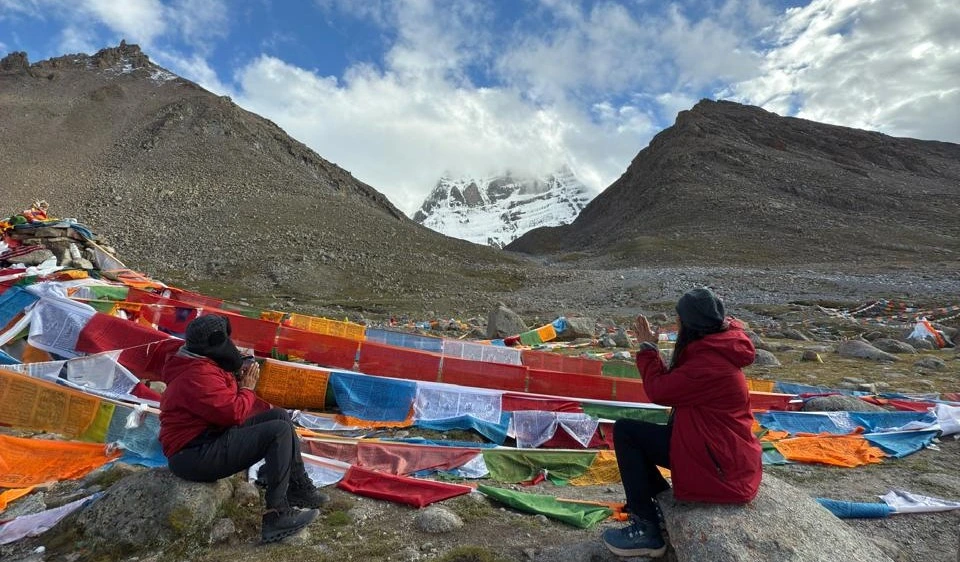
Standing at 6,638 meters in the remote Tibetan Himalayas, Mount Kailash remains one of Earth’s greatest enigmas. While thousands have conquered Mount Everest, no human has ever set foot on Kailash’s summit. This Mount Kailash mystery has spawned countless theories, from time travel claims to alien pyramids, but the truth is far more fascinating than fiction.
This comprehensive guide examines the Mount Kailash facts vs myths, exploring why Mount Kailash is not climbed, its profound religious significance, and the scientific explanations behind this remarkable mountain. We separate verified geological and geographical data from viral internet claims, providing readers with an authoritative, evidence-based understanding.
The Geography and Geology of Mount Kailash
Location and Physical Characteristics
Mount Kailash is located in the Gangdise Mountains of the Tibet Autonomous Region, China, approximately 100 kilometers from the India-China border. At 6,638 meters (21,778 feet) above sea level, it ranks far below the world’s highest peaks in terms of elevation.
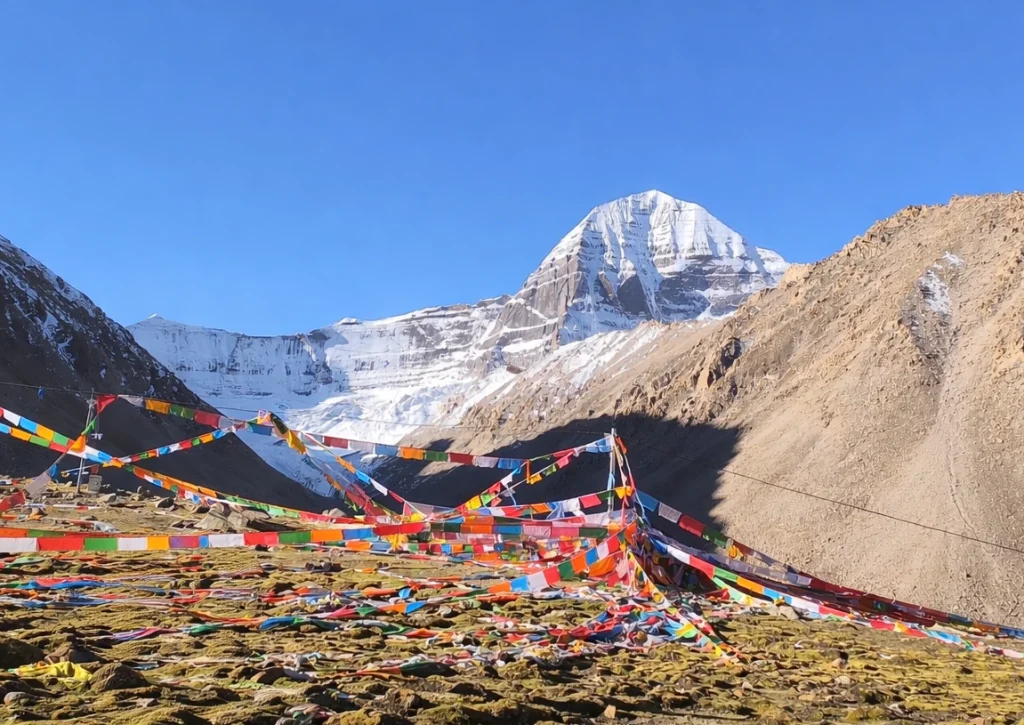
What makes Mount Kailash extraordinary is not its height but its distinctive Mount Kailash pyramid shape. The mountain exhibits four remarkably symmetrical faces aligned nearly perfectly with the cardinal directions: north, south, east, and west. This geometric precision in a natural formation is exceptionally rare and has contributed to numerous theories about its origin.
The mountain’s steep slopes prevent snow accumulation on much of its surface, creating a striking visual contrast between black rock faces and white snow bands. This unique appearance has made it instantly recognizable and added to its mystique.
Scientific Explanation of Mount Kailash Formation
According to geologists, Kailash Parvat formed approximately 50 million years ago during the collision of the Indian and Eurasian tectonic plates, the same massive geological event that created the entire Himalayan range. This process involves one continental plate being forced under another, causing the Earth’s crust to buckle and fold upward.
The mountain’s distinctive pyramid shape developed much more recently, around 2.5 million years ago during the Quaternary Ice Age. Glacial erosion from all directions carved the mountain into its current symmetrical form. It’s a process similar to how Switzerland’s Matterhorn acquired its iconic shape.
This scientific explanation of Kailash Parvat demonstrates that its remarkable appearance results from natural geological processes acting over millions of years, not artificial construction as some theories suggest.
Religious Significance of Mount Kailash: A Sacred Center for Four Faiths
The religious significance of Kailash Parvat transcends any single faith tradition. Four major religions (Hinduism, Buddhism, Jainism, and Bon) regard this mountain as sacred, making it one of only two places on Earth revered by four different belief systems. The other is Sri Lanka’s Adam’s Peak.
Hindu Traditions
In Hinduism, Kailash Parvat is believed to be the earthly abode of Lord Shiva, one of the principal deities. Hindu scriptures describe Shiva residing here in eternal meditation with his consort, Goddess Parvati. The mountain is considered the Axis Mundi, or center of the universe, in Hindu cosmology.
According to the ancient epic Ramayana, the demon king Ravana once attempted to lift Mount Kailash as a demonstration of his power. Lord Shiva responded by pressing down with his toe, trapping Ravana beneath the mountain until he surrendered. This story emphasizes the mountain’s sacred inviolability.
Buddhist, Jain, and Bon Beliefs
Buddhists identify Mount Kailash as the residence of Buddha Demchok (Chakrasamvara), representing supreme bliss and compassion. They call it Kang Rinpoche, meaning “Precious Snow Mountain.”
In Jainism, the mountain is known as Ashtapada, the site where the first Tirthankara, Rishabhadeva, attained liberation from the cycle of rebirth. This is a pivotal location in Jain spiritual history.
Followers of Bon, Tibet’s ancient pre-Buddhist religion, consider Mount Kailash the soul of Tibet and the axis connecting heaven and earth. They call it the “Nine-Story Swastika Mountain.“
The Sacred Circumambulation (Kora)
For thousands of years, pilgrims from all four religions have performed the kora, a ritual circumambulation of the mountain. The 52-kilometer circuit typically takes three days to complete at altitudes exceeding 5,000 meters. Believers hold that completing the Kailash Mansarovar Yatra cleanses past sins and brings spiritual merit.
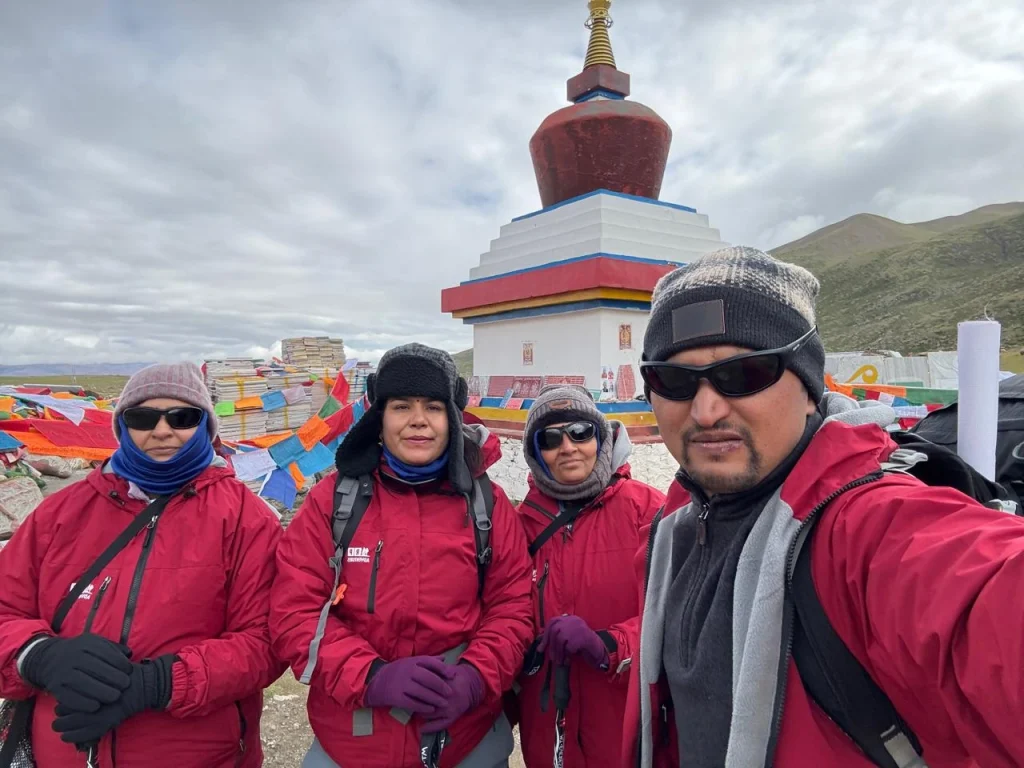
This shared pilgrimage tradition represents a rare point of unity among diverse faith communities, all of whom maintain that the summit itself should remain untouched by human footsteps.
Lake Manasarovar and Rakshas Tal: The Sacred Twin Lakes
At the base of Mount Kailash lie two remarkable lakes that further enhance the region’s mystique: Lake Manasarovar and Rakshas Tal. Though geographically close, these Lake Manasarovar and Rakshas Tal bodies exhibit strikingly different characteristics.
Lake Manasarovar: The Bright Lake
Lake Manasarovar sits at 4,590 meters elevation and contains freshwater that is safe to drink. Its nearly circular shape has led to associations with the sun and positive energy. Hindu tradition holds that it was created by the god Brahma and serves as a bathing place for deities.
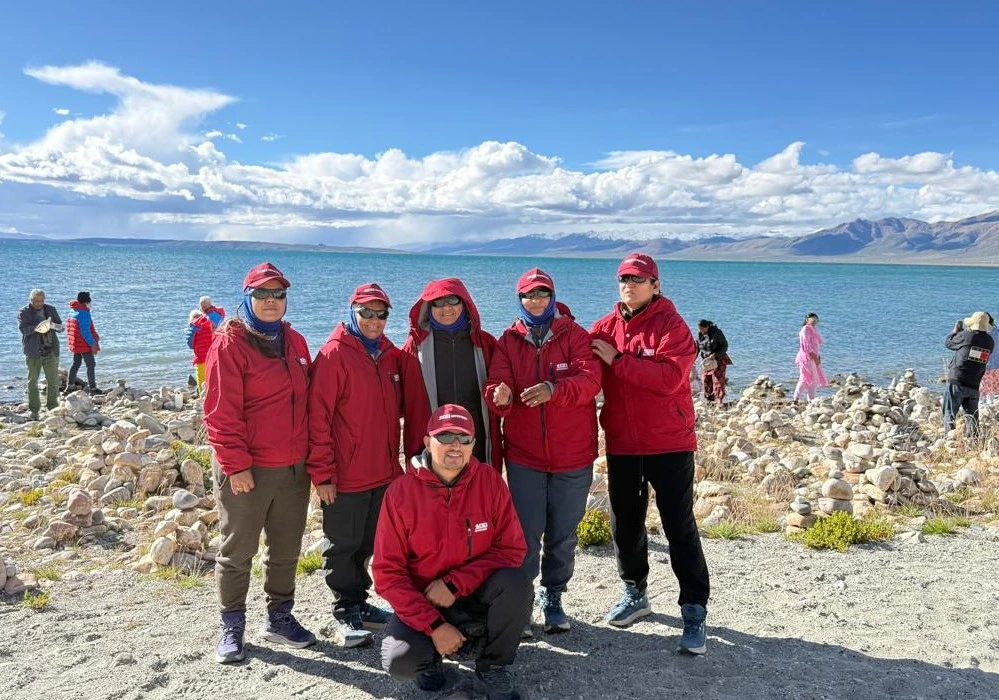
The lake supports aquatic vegetation and fish populations, and its shores attract diverse bird species. Its Sanskrit name combines “manas” (mind) and “sarovar” (lake), suggesting it was formed from the mind of Brahma.
Rakshas Tal: The Dark Lake
In stark contrast, Rakshas Tal contains highly saline water that cannot support life. Its crescent shape has led to associations with darkness and negative energy. Hindu legend states that the demon king Ravana performed penance on its shores, earning it the name “Demon Lake.” (Rakshas means demon in Sanskrit.)
The scientific explanation for Rakshas Tal’s salinity is straightforward: it is an endorheic lake with no outlet. Water flows in from Manasarovar but cannot exit. Over millennia, evaporation has concentrated minerals and salts, creating conditions too hostile for most organisms.
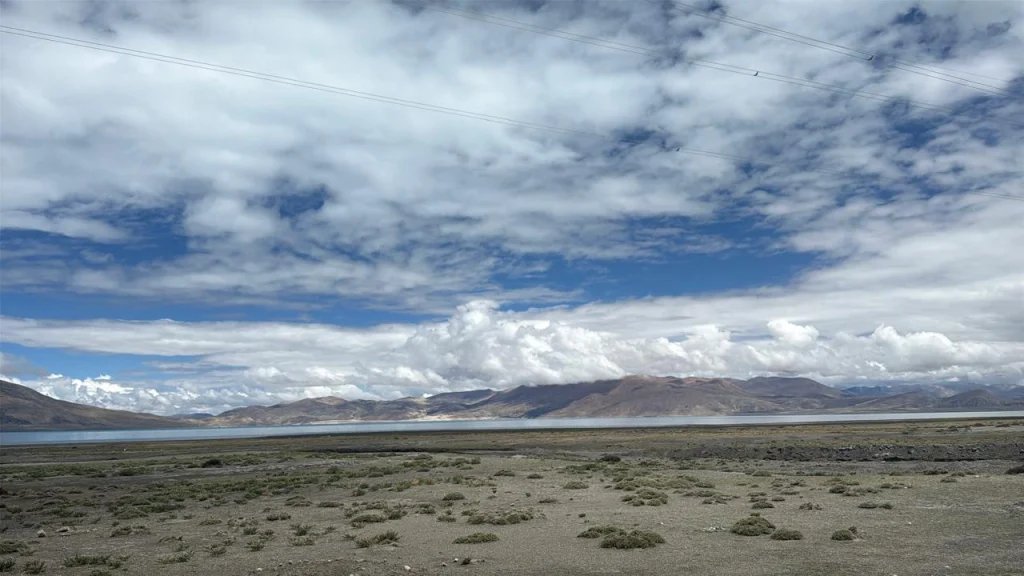
This natural hydrological process demonstrates how geological factors create dramatic differences between neighboring bodies of water, without requiring supernatural explanations.
Rivers Originating from Mount Kailash: Asia’s Water Tower
The Mount Kailash region is often called the “Water Tower of Asia” because four of the continent’s major rivers originate in this area. These include the Indus, Sutlej, Brahmaputra (Yarlung Tsangpo), and Karnali, which later joins the Ganges system.
These rivers originating from Mount Kailash collectively sustain more than one billion people across China, India, Pakistan, Bangladesh, and Nepal. They provide water for drinking, agriculture, industry, and hydroelectric power generation.
The region’s role as a hydrological nexus stems from its position at a high elevation where glaciers and snowmelt feed multiple watershed systems. This ecological significance adds another dimension to Mount Kailash’s importance beyond its religious and cultural value.
Mount Kailash Facts vs Myths: Examining Viral Claims
Numerous sensational claims about Mount Kailash have circulated online, particularly following Russian ophthalmologist Dr. Ernst Muldashev’s 1999 expedition. A critical examination of these Mount Kailash facts vs myths reveals important distinctions between speculation and verified evidence.
The Time Travel Myth
The Mount Kailash time myth claims that time flows differently near the mountain, with some accounts alleging rapid aging or accelerated nail and hair growth. These stories often reference four Siberian climbers who supposedly aged dramatically and died shortly after attempting to climb the mountain.
No credible evidence supports these claims. No names, official records, or documentation of such incidents exists. The concept of time dilation, as described by Einstein’s Theory of Relativity, requires either velocities approaching the speed of light or proximity to massive gravitational fields like black holes. These conditions are utterly absent in Kailash Parvat, making it a unique and sacred location.
Reports of faster nail or hair growth likely stem from physiological responses to high altitude, intense UV radiation, and dry air. These are normal environmental factors, not temporal anomalies.
The Artificial Pyramid Theory
Muldashev claimed Mount Kailash is a hollow, man-made pyramid constructed by an ancient, advanced civilization. However, geological evidence conclusively demonstrates the mountain formed through natural tectonic processes over millions of years.
The pyramid-like shape results from glacial erosion patterns common in high-altitude environments. Similar formations exist throughout mountain ranges worldwide. Core samples and seismic studies show no evidence of artificial structures or hollow chambers within the mountain.
The Numerology Claims
Viral posts claim Mount Kailash lies exactly 6,666 kilometers from both the North Pole and Stonehenge, suggesting deliberate placement by advanced beings. Modern GPS measurements reveal these figures are inaccurate by hundreds of kilometers.
The actual distances vary significantly depending on measurement methods and reference points. The number 6,666 appears to have been selected for its mystical connotations rather than reflecting real measurements.
NASA and Magnetic Anomalies
Some sources claim NASA detected unusual magnetic fields or supernatural energy at Mount Kailash. NASA’s public records contain no such findings. Satellite imagery and geological surveys show no magnetic or gravitational anomalies beyond normal variation expected in mountainous regions.
These fabricated NASA claims appear designed to lend false scientific credibility to unfounded theories.
Why Mount Kailash is Not Climbed: Religious, Political, and Technical Factors
The question of why Mount Kailash is not climbed has multiple interconnected answers involving religious reverence, government policy, and genuine technical challenges.
Religious and Cultural Respect
The primary reason Mount Kailash remains unclimbed is the profound respect mountaineers have for its religious significance. Given that billions of people across four major faiths consider the mountain sacred, climbing it would be seen as deeply disrespectful.
In 1985, legendary mountaineer Reinhold Messner was offered permission by Chinese authorities to attempt the climb. He declined, stating: “If we conquer this mountain, we conquer something in people’s souls. I suggest climbing something else but leave this mountain sacred.”
This Reinhold Messner Mount Kailash decision exemplifies the mountaineering community’s recognition that some peaks should remain unclimbed out of cultural sensitivity.
Government Ban
The Chinese government officially banned climbing Mount Kailash in 2001 after a Spanish expedition received conditional permission, triggering international protests from religious communities. This policy remains in effect, making any attempt illegal.
Historical Climbing Attempts
Few serious climbing attempts have been documented. In 1926, British mountaineer Hugh Ruttledge examined the north face and declared it nearly vertical and practically impossible to climb with available equipment. In 1936, R.C. Wilson attempted an ascent but was forced back by severe weather.
The 11th-century Tibetan Buddhist saint Milarepa is legendarily said to have reached the summit by riding the first ray of morning sunlight. This is a metaphorical story emphasizing that spiritual ascent transcends physical conquest.
Scientific and Technical Challenges of Mount Kailash
Beyond religious and political factors, Mount Kailash presents genuine technical mountaineering challenges that make it an extremely dangerous objective.
Extreme Terrain
The mountain’s steep pyramid structure features near-vertical rock faces with minimal snow accumulation, requiring advanced mixed climbing techniques combining rock and ice climbing. The symmetrical erosion that created its distinctive shape also produced consistently challenging terrain on all sides.
Weather and Environmental Hazards
The Mount Kailash region experiences severe weather conditions including sudden storms, extreme temperature fluctuations, and powerful winds. At elevations above 6,000 meters, oxygen levels are approximately 50% of those at sea level, significantly impairing physical and cognitive function.
Altitude sickness can cause disorientation, confusion, and poor decision-making. These effects are sometimes misinterpreted as the “invisible force” that allegedly prevents climbers from ascending. But they’re well-documented medical conditions, not supernatural phenomena.
Remote Location
Mount Kailash’s remote location in western Tibet presents logistical challenges for any expedition. Access requires extensive permits, specialized equipment transport across difficult terrain, and emergency evacuation plans complicated by the distance from medical facilities.
Conclusion: Respecting the Balance Between Science and Spirituality
Mount Kailash stands as a powerful reminder that not everything requires human conquest. This comprehensive examination of the Mount Kailash mystery reveals a mountain shaped by millions of years of geological processes. Tectonic collisions and glacial erosion created its distinctive pyramid form and gave birth to rivers sustaining over a billion people.
The religious significance of Mount Kailash transcends any single faith tradition, uniting Hindus, Buddhists, Jains, and Bon practitioners in shared reverence. This spiritual importance, recognized by the mountaineering community and protected by government policy, keeps the summit pristine.
While viral claims about time travel, hollow pyramids, and supernatural forces make compelling internet content, they lack credible evidence. The real Mount Kailash needs no embellishment. Its genuine significance as a geological wonder, ecological nexus, and spiritual center is profound enough.
Understanding why Mount Kailash is not climbed reveals important lessons about cultural sensitivity and environmental stewardship. In an era when humans have walked on the Moon and plan missions to Mars, having a place on Earth where we choose not to plant our flag represents wisdom, not weakness.
Mount Kailash teaches us that some mysteries are better honored than solved, some peaks better admired than conquered. By respecting both the scientific facts and the spiritual beliefs surrounding this remarkable mountain, we acknowledge the full complexity of human experience. Here geology and devotion, nature and culture, knowledge and reverence all converge.
For those seeking to understand Mount Kailash, the most important insight is this: its power lies not in fabricated myths but in the authentic intersection of natural wonder and human faith. That intersection deserves our protection, study, and respect.
Posted on